
-
Supplier: RS Components, Ltd.
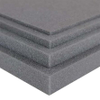
Description: RS PRO RegAq6Pla Rubber Sheet
- Overall Thickness: 0.2362206 inch
- Overall Width / O.D.: 37.401595 inch
- Overall Length: 37.401595 inch
- Overall Width: 37.401595 inch
-
Supplier: SAE International
Description: Aluminum Alloy Plate 4.3Zn - 3.3Mg - o.6Cu - o.2Mn - 0.17Cr (7o79-T651) Stress-Relief Stretched
-
Supplier: DigiKey
Description: PEI Sheet For use with 3D Printers, ABS/PLA Filaments
-
-
Supplier: MCG - Performance Polymers Division
Description: adapted to PE, PP, EVOH, PA, PS, PET, PBT, PC, metal and glass and may be used for: Film (cast film, blown film) Multi-layer sheet Pipe Coating Blow molding (bottles, containers) Coupling agent / compatiblizer (plastic with glass and natural fiber) Adhesive promoter for injected or extruded
- Industry: Automotive, Industrial, Medical / Food (FDA)
- Type: Extrusion Grade Resin, Film Grade Resin, Molding Resin, Thermoplastic
- Chemical System: Polycarbonate (PC), Polyester (PET, PBT), Polyethylene, Polypropylene (PP)
-
Supplier: ASTM International
Description: sheet-molding compound, or SMC. 1.2 One objective of this practice is to present comprehensive definitions of possible failure modes to serve as a guide for contracts, drawings, product specifications and product performance. Note 1-Figures 2 through 11 referred to in the practice are



Find Suppliers by Category Top
More Information Top
 Indicates content that may require registration and/or purchase.

-
Adipate and Citrate Esters as Plasticizers for Poly(Lactic Acid)/Thermoplastic Starch Sheets
Some papers described the production of PLA sheets modified with a styrene- acrylic multifunctional oligomeric agent [21], and sheets of native starch (corn, potato and waxy corn) and phosphor- ylated corn starch with bagasse fiber [22] produced by calendering extrusion process.
-
Three‐layer sheets based on gelatin and poly(lactic acid), part 1: Preparation and properties
TSM results for PLA/Ge-30Gly/ PLA sheet and par- ent films are summarized in Table II.
-
Preparation of single poly(lactic acid) composites
In this study, amorphous PLA sheets and crystalline PLA fibers/fabrics were laminated and compression‐molded to form an SPC at a processing temperature substantially lower than PLA's melting temperature.
-
Characterization of lignocellulosic–poly(lactic acid) reinforced composites
In comparison, the tear index values exhibited no changes with the PLA treatment, whereas the hot- pressed PLA sheets exhibited a slight decrease in the tear index performance.
-
Continuous Blending Approach in the Manufacture of Epoxidized Soybean‐ P lasticized Poly(lactic acid) Sheets and Films
… an extruder and a peristaltic injector pump attached in tandem was developed for continuous and accurate incorporation of epoxidized soybean oil (ESO) into a poly (lactic acid) (PLA) matrix in order to enhance the flexibility and toughness of PLA sheet and film.
-
Bamboo fabric reinforced polypropylene and poly(lactic acid) for packaging applications: Impact, thermal, and physical properties
PLA sheets with 0.25 mm thickness manu- factured by NatureWorks 2003D were supplied by Alto Packaging Limited, Hastings, New Zealand.
-
Advanced Materials, ICAMMP 2011
Tensile strength of the molded PLA sheet manufactured with same parameter as CGM/PLA composite was 48.01 MPa (not shown in the figure), and the tensile strength of the molded CGM sheet was 3.81 MPa, therefore, the addition of the PLA …
-
Mechanical properties of denim fabric reinforced poly(lactic acid)
Transparent PLA sheets (Toraysaehan Inc.) were used as the polymer matrix.
-
Effect of annealing and orientation on microstructures and mechanical properties of polylactic acid
PLA sheets were produced using a twin extruder (Thy- shon 30) and a sheet die with a width of 300 mm and a gap of about 0.3 mm.
-
Mechanical properties and biodegradability of green composites based on biodegradable polyesters and lyocell fabric
a Only PLA sheet was used.