
-
Description: presses; blooming mills; bulldozers; calendar mills; calendering rolls; compression benders; cross roll straighteners; cutoff and slitting equipment; dedimplers; draw benches; draw benders; entry and exit equipment; extruders; forging presses; forging reducing rolls; four-slide
-
Supplier: AMICO
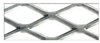
Description: Flattened expanded metal is formed by passing regular or raised expanded metal through a cold rolled reducing mill. In this process the overall thickness is reduced. The sheet is then sent through a leveler to maintain its flatness. A smooth, flat and level sheet is created. Metals commonly
- Strand Thickness: 0.029 to 0.119 inch
- Metal: Aluminum, Stainless Steel, Steel
- Features: Calendered / Flattened
-
Supplier: WD Bearing Group
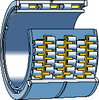
Description: WD four-row cylindrical roller bearingsare used almost exclusively for the roll necks of rolling mill stands, calenders and roller presses. Their friction is low compared with other roller bearings. As they are normally mounted with an interference fit on the roll neck, they are
-
-
Supplier: WD Bearing Group
Description: WD four-row cylindrical roller bearingsare used almost exclusively for the roll necks of rolling mill stands, calenders and roller presses. Their friction is low compared with other roller bearings. As they are normally mounted with an interference fit on the roll neck, they are
- Type: Cylindrical
-
Supplier: WD Bearing Group
Description: WD four-row cylindrical roller bearingsare used almost exclusively for the roll necks of rolling mill stands, calenders and roller presses. Their friction is low compared with other roller bearings. As they are normally mounted with an interference fit on the roll neck, they are
-
Supplier: SKF/North America
Description: Four-row (fig) and six-row cylindrical roller bearings (fig) are used almost exclusively for the roll necks of rolling mill stands, calenders and roller presses. Their friction is low compared with other roller bearings. As they are normally mounted with an interference fit on the
- Bore: 24.015761 inch
- Outside Diameter: 32.283482 inch
- Overall Width: 16.929143 inch
- Static Radial Load: 5,305,280 lbs
-
Supplier: SKF/Global
Description: Four-row (fig) and six-row cylindrical roller bearings (fig) are used almost exclusively for the roll necks of rolling mill stands, calenders and roller presses. Their friction is low compared with other roller bearings. As they are normally mounted with an interference fit on the
- Bore: 22.047256 inch
- Outside Diameter: 32.283482 inch
- Overall Width: 23.62206 inch
- Static Radial Load: 7,643,200 lbs
-
Supplier: SKF/North America
Description: Four-row (fig) and six-row cylindrical roller bearings (fig) are used almost exclusively for the roll necks of rolling mill stands, calenders and roller presses. Their friction is low compared with other roller bearings. As they are normally mounted with an interference fit on the
- Bore: 7.87402 inch
- Outside Diameter: 11.417329 inch
- Overall Width: 7.5590592 inch
- Static Radial Load: 719,360 lbs
-
Supplier: SKF/North America
Description: Four-row (fig) and six-row cylindrical roller bearings (fig) are used almost exclusively for the roll necks of rolling mill stands, calenders and roller presses. Their friction is low compared with other roller bearings. As they are normally mounted with an interference fit on the
- Bore: 17.322844 inch
- Outside Diameter: 25.984266 inch
- Overall Width: 13.385834 inch
- Static Radial Load: 3,079,760 lbs
-
Supplier: SKF/Global
Description: Four-row (fig) and six-row cylindrical roller bearings (fig) are used almost exclusively for the roll necks of rolling mill stands, calenders and roller presses. Their friction is low compared with other roller bearings. As they are normally mounted with an interference fit on the
- Bore: 22.48426411 inch
- Outside Diameter: 32.006710197 inch
- Overall Width: 23.3858394 inch
- Static Radial Load: 7,530,800 lbs
-
Supplier: SKF/North America
Description: Four-row (fig) and six-row cylindrical roller bearings (fig) are used almost exclusively for the roll necks of rolling mill stands, calenders and roller presses. Their friction is low compared with other roller bearings. As they are normally mounted with an interference fit on the
- Bore: 10.236226 inch
- Outside Diameter: 14.566937 inch
- Overall Width: 8.661422 inch
- Static Radial Load: 1,045,320 lbs
-
Supplier: SKF/Global
Description: Four-row (fig) and six-row cylindrical roller bearings (fig) are used almost exclusively for the roll necks of rolling mill stands, calenders and roller presses. Their friction is low compared with other roller bearings. As they are normally mounted with an interference fit on the
- Bore: 14.042133567 inch
- Outside Diameter: 21.653555 inch
- Overall Width: 15.74804 inch
- Static Radial Load: 3,372,000 lbs
-
Supplier: SKF/Global
Description: Four-row (fig) and six-row cylindrical roller bearings (fig) are used almost exclusively for the roll necks of rolling mill stands, calenders and roller presses. Their friction is low compared with other roller bearings. As they are normally mounted with an interference fit on the
- Bore: 36.90946875 inch
- Outside Diameter: 50.009869525 inch
- Overall Width: 32.50001755 inch
- Static Radial Load: 18,658,400 lbs
-
Supplier: JiuJiang Ingiant Technology Co., Ltd.
Description: This rotating joint is specifically designed for core equipment in continuous process industries: Paper Industry: Dryer cylinders, calender rolls. Steel & Metal Processing: Cooling rolls in continuous casting, roll neck cooling in rolling mills. Rubber & Plastics:
- Configuration: Drum Type
-
Supplier: KADANT
Description: breast rolls, wire return rolls and guide rolls), the press section, and the calender sections. Additionally, it is ideal in any location where space is limited or the atmosphere is too wet for an electrical oscillation system. How Pneumatic Oscillation Works The
- Device Type: Rod Type
-
Supplier: Infinity Tapes, LLC
Description: Superior easy release properties (Thermal Silicones) Standard Printing (Remove Liner to Expose Adhesive) Custom Printing Colored Printing - Red, Blue, Black, or Custom Flat Roll Lengths: up to 16,400' Spool Lengths: Up to 40,000'
- Width: 12.7 to 1,219.2 mm
- Thickness: 0.0635 mm
- Features: Low Transfer / Extractable
- Liner Type: Paper / Kraft Paper
-
Supplier: Ameridrives Couplings
Description: medium torque applications where high misalignment capacity is required and where equipment must be disconnected quickly and/or frequently. Typical applications include drives for auxiliary equipment such as levelers, uncoilers, side trimmers, tension, run-out tables, pinch rolls, brush
-
Supplier: KADANT
Description: A proven technique that greatly improves doctoring performance and increases blade life. Features/Benefits Prevents particle buildup under the doctor blade Reduces roll scoring Extends blade life Enhances sheet shedding capability Increased roll life Oscillation Improves Doctoring
- Stroke or X-Axis Travel: 0.75 inch
- Motor Voltage: 115 to 575 volts
- Motor Type: AC
- Actuation Type: Electrical





Find Suppliers by Category Top
Featured Products Top
-
 Paper Industry – Dryer cylinders, calender rolls, Yankee dryers. Steel & Metal Processing – Cooling rolls in continuous casting (read more)
Browse Slip Rings Datasheets for JiuJiang Ingiant Technology Co., Ltd. -
. Following calendering, each foil roll is cut into narrower rolls (read more)
Browse Force and Load Sensors Datasheets for ABB Measurement & Analytics
More Information Top
 Indicates content that may require registration and/or purchase.

-
Rubber as a Construction Material for Corrosion Protection: A Comprehensive Guide for Process Equipment Designers
This shape forming process can be accomplished by squeezing it between calender rolls , pushing it through a die having the desired profile in the extruder or by confining it under pressure in a mould cavity of required shape and size.
-
PVC: Production properties and uses
It may be expensive to do this; but it could be very much more expensive to repair or replace damaged calender rolls .
-
Industrial and Specialty Papers, Volume 2, Manufacture
Flying splice unwinds and winders have been employed with inter- locks to unload the calender while the splice is passing through the nips to avoid damaging the calender rolls .
-
Handbook of PLASTIC AND RUBBER ADDITIVES Volume 1 and 2
… Descrip.: Sulfur-vulcanized vegetable oil, select grade Uses: Processing aid for rubber compounding and syn. polymers, tubing and calendered sheets, extruded goods, pressure sensitive adhesives; used in very tacky compds. to reduce sticking to mill and/or calender rolls without interfering with intended …
-
Encyclopedic Dictionary of Polymers
The process of applying plastics to substrates such as paper or fabric by passing both the substrate and a plastic film through calender rolls .
-
Calendering thermoplastic materials
Schematicdiagram of calender rolls and coordinates.
-
Principles of Polymer Processing
power consumption per unit length of upper calender roll capillary end correction (section 3.3.3) rate of extension of a fdament (section 4.3.4) width of a screw flight (chapter 6) rate-of-deformation tensor force on a calender roll …
-
Industrial and Specialty Papers Volume 3, Applications
exerted by calender rolls .
-
Synthetic Paper
Unplasticized PVC or heavily filled formulations may be made on calendering rolls (367012, 367060, 367165).
-
Advances in Elastomers I
In this method, compound is fed around a calender roll from a calender nip, and the sheeted compound is applied to the fabric at a second nip.