
Products & Services
See also: Categories | Featured Products | Technical Articles | More Information-
Supplier: PERFORMANCE CONTROLS, INC.®
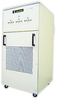
Description: amplifier system that contains three 800 VDC, 250 Arms, 600 Apk amplifiers and a mains isolated power supply, intended for use in precision control systems. The amplifier operates from 380-480 VAC, 50-60 Hz three phase mains connected power and provides a precisely controlled,
-
Supplier: PERFORMANCE CONTROLS, INC.®
Description: The QDCM1400A-LN is a pulse width modulated gradient system that contains three 1400 VDC, 250 Arms, 600 Apk amplifiers and a mains isolated power supply, intended for use in precision control systems. The amplifier operates from 380–480 VAC, 50-60 Hz three phase mains connected
-
Supplier: PERFORMANCE CONTROLS, INC.®
Description: Shim Amplifiers are employed to control or adjust magnetic fields. These amplifiers shape (shim) the magnetic fields present in the scan volume. PCI will work with you to meet your specific requirements. Some key points: Implemented with a full feature set and optional form factors
-
-
Supplier: LORD MicroStrain Sensing Systems
Description: Carrier Amplifier-Oscillator/Demodulator for DVRTs®; Inductive, Capacitive and Resistive Bridge Circuits. Overview The DEMOD-DC® in-line signal conditioner makes DVRT® sensors as easy to use as a potentiometer. With integral signal conditioning electronics, the user connects power, ground and
- Low Pass Cutoff Frequency: 0.01 to 20 kHz
- Operating Temperature: -40 to 185 F
- Signal Conditioning: Bridge Conditioner
- Features: DC Voltage Input
-
Supplier: Visual Sound, Inc.
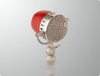
Description: Electro-Voice The Cardinal is a cardioid condenser microphone designed to capture vocal and instrumental details in live sound or studio applications. Employing Class-A, discrete, ultra-low noise, amplifier circuitry, the Cardinal's smooth and detailed performance is sure to please even the
- Directivity: Cardioid, Directional
-
Supplier: Hottinger Brüel & Kjær A/S
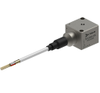
Description: zero-to-medium frequency applications. This module contains a MEMS capacitive sensing element, a custom integrated circuit amplifier, and differential output, packaged in a rugged aluminum housing weighing 13:g. Units incorporate an integral cable assembly. On board regulation is provided to
- Acceleration: 200 g
- Frequency Range: 0 to 1,750 Hz
- Operating Temperature: -67 to 257 F
- Sensor Mounting: Adhesive Base
-
Supplier: Silicon Designs, Inc.
Description: The Model 1525 MEMS DC surface mount inertial accelerometer incorporates Silicon Designs' own high-performance sense element, along with a ±4.0V differential analog output stage, internal temperature sensor and integral sense amplifier, all within a miniature, nitrogen damped, hermetically
- Acceleration: 5 to 50 g
- Frequency Range: 0 to 900 Hz
- Maximum Shock: 2,000 to 5,000 g
- Operating Temperature: -67 to 257 F
-
Supplier: Hottinger Brüel & Kjær A/S
Description: variation effects, making them relatively insensitive to temperature changes and thermal gradients. Sensors are hermetically sealed for reliable operation in high humidity and dirty environments, and feature a custom integrated circuit amplifier and differential output stages, with a
- Acceleration: 5 g
- Frequency Range: 0 to 200 Hz
- Operating Temperature: -67 to 257 F
- Features: Linear Accelerometer, Other
-
Supplier: Hottinger Brüel & Kjær A/S
Description: making them relatively insensitive to temperature changes and thermal gradients. Sensors are hermetically sealed for reliable operation in high humidity and dirty environments, and feature a custom integrated circuit amplifier and differential output stages, with a 4-pin M4.5 x 0.35
- Acceleration: 25 g
- Frequency Range: 0 to 900 Hz
- Operating Temperature: -40 to 248 F
- Features: Linear Accelerometer, Other
-
Supplier: Hottinger Brüel & Kjær A/S
Description: making them relatively insensitive to temperature changes and thermal gradients. Sensors are hermetically sealed for reliable operation in high humidity and dirty environments, and feature a custom integrated circuit amplifier and differential output stages, with a 4-pin M4.5 x 0.35
- Acceleration: 200 g
- Frequency Range: 0 to 1,500 Hz
- Operating Temperature: -67 to 257 F
- Features: Linear Accelerometer, Other
-
Supplier: TMP Pro Distribution
Description: Designed for speed and transparency, the Stage Two vacuum tube microphone's transformerless, Class A discrete tube amplifier circuit delivers low noise, superb transient response and utilizes a single hand-selected ECC88 vacuum tube. Like the Bottle, the Stage Two has the ability to hot-swap
-
Supplier: TMP Pro Distribution
Description: dB) and a very high output level (+12dBV), making it the perfect choice for today's high sample rate/deep word length digital platforms. Instead of integrated circuits (chips), the Stage One employs a transformless Class A discrete amplifier circuit to ensure the most accurate and noise-free
-
Supplier: Precision Resistor Co., Inc.
Description: measurements under load - Without this feature the voltage drop across a low value element will no longer be a linear function of current. Thru-Hole or SMD Designs - (1) are ideal in amplifier circuits and accurate voltage drop applications. (2) Offer excellent thermal transfer to base and
- Category / Application: Current Sensing Resistor
- Technology / Construction: Wirewound Resistor






Find Suppliers by Category Top
Featured Products Top
-
 require zeroing or specialized correction. Thermocouple RF power monitors, such as LadyBug’s LB466A product line, exhibit inherent temperature stability. The output voltage is generated by a temperature difference (thermal gradient) that remains constant for a given level of RF power, making (read more)
Browse RF Power Detectors Datasheets for LadyBug Technologies LLC
Conduct Research Top
-
Common Formulas and RF Power Requirements for Radiated Immunity Testing (.pdf)
Important Factors: * Antenna Gain. * Antenna VSWR. * Cable Losses. * Linearity of the power amplifier. * Anechoic room field gradients (6dB maximum). * Antenna gain vs. Frequency. * Transmit distance. * Amplitude modulation. * Amplifier harmonic levels at rated power
-
A Microfluidic System for Biological Particle Enrichment Using Contactless Dielectrophoresis
arisen, including density. gradient-based centrifugation or filtration,2 fluorescent. and magnetic activated cell sorting, cell surface. markers,3 and laser tweezers.4 Although each. of these techniques is unique in its inherent advantages. and disadvantages, all are forced to compromise. between high
-
MSilica Nanoparticles Treated by Cold Atmospheric-Pressure Plasmas Improve the Dielectric Performance of Organic-Inorganic Nanocomposites
and the. other stream does not. We focus primarily on distributing. the beads across the outlet channel due to the DEP force. generated by gradients in the magnitude of the imposed. electric field. We also show that the secondary flow generated. by the bead motions can be used to mix the two fluid. streams
More Information Top
 Indicates content that may require registration and/or purchase.

-
Dynamic Pulsed-Field-Gradient NMR
109 4.3 Magnetic Field Gradient Amplifiers . . . . . . . . . . . . . . . . . . . . . . . . . .
-
Views on Evolvability of Embedded Systems
They are driven by the three gradient amplifiers , one for each spatial dimension, i.e. x, y, and z.
-
Ultra High Field Magnetic Resonance Imaging
In addition, a vi- brating conductor in a magnetic field produces an electromotive force, which will appear to the gradient amplifier as additional (frequency dependent) load resistance.
-
Minimization of dead‐periods in MRI pulse sequences for imaging oblique planes
The slew rates and maximum currents of gradient amplifiers limit the minimum possible TR and TE by adding dead‐periods to the pulse sequences.
-
Spiral imaging on a small‐bore system at 4.7t
A constant‐voltage gradient waveform design algorithm is developed to reduce readout times as well as minimize waveform distortions due to gradient amplifier nonlinearities.
-
Gradient system providing continuously variable field characteristics
Gradient Amplifiers .
-
Multi-output power supply with series voltage compensation capability for Magnetic Resonance Imaging system
GRADIENT AMPLIFIERS .
-
Power supply with independently regulated multiple outputs
The power supply concept was developed for a multi-level inverter used as gradient amplifier for a Magnetic Resonance Imaging (MRI) system, but the concept is of general application for systems requiring multiple outputs isolated and independently regulated at similar power levels.
-
NMR Methods for the Investigation of Structure and Transport
The gradient amplifier used (BAFPA 40) supplies a maximum current of 40 A, resulting in maximum gradients G of 0.144 and 1 T/m, respectively.
-
Optimization of duty cycles for MRI scanners
The gradient coils together with gradient ampli- fiers are parts of the magnetic gradient system.