
Products & Services
See also: Categories | Featured Products | Technical Articles | More Information-
Supplier: Emerson Automation Solutions – Rosemount
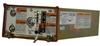
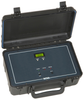
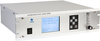
Description: The NGA 2000 FID Hydrocarbon Analyzer Module is the industry’s first modular total hydrocarbon analyzer. It is a self contained unit, complete with detector and electronics. Designed for continuous measurement of hydrocarbon gas concentration, the NGA 2000 FID
- Response Time: 1.000000000000002 seconds
- Operating Temperature: 32 to 113 F
- Instrument Type: Analyzer
- Display: Digital
-
Supplier: Emerson Automation Solutions – Rosemount
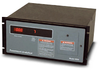
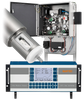
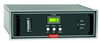
Description: Rosemount Analytical has designed the 400A Hydrocarbon Analyzer for high sensitivity, stability and safety. The 400A uses the flame ionization detection method in a field-proven design to provide reliable performance in analysis in high purity gases and trace levels of
- Response Time: 0.6 seconds
- Operating Temperature: 32 to 110 F
- Electrical Outputs: Analog Current, Analog Voltage
- Instrument Type: Analyzer
-
Supplier: Emerson Automation Solutions – Rosemount
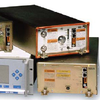
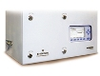
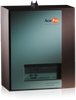
Description: The NGA 2000 HFID Heated Hydrocarbon Analyzer Module uses flame ionization detection (FID) technology to continuously measure total hydrocarbon concentration in sample gas at any user selectable temperature between 200°F and 400°F. The modular design allows for easy system
- Response Time: 1.5 seconds
- Operating Temperature: 59 to 95 F
- Instrument Type: Analyzer
- Display: Digital
-
-
Supplier: MO2 Inc.
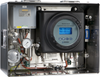
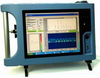
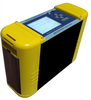
Description: The PetroCheck Portal Hydrocarbon Analyzer (PHA) is the ideal instrument for precise measurement and quantification of petroleum hydrocarbons dissolved in water and/or as vapor. The PetroCheck PHA is designed to meet rigorous field monitoring requirements and has proven itself
- Response Time: 4.999999999999998 seconds
- Operating Temperature: 32 to 122 F
- Application: Ambient Air Monitoring, Process Gas
- Electrical Outputs: Analog Voltage
-
Supplier: Accuris
Description: ANALYZER, TRACE HYDROCARBON
-
Supplier: Process Sensing Technologies USA
Description: Transportable hydrocarbon dew-point analyzer system for field-measurements in natural gas. Suitable for IEC Zone 1 or 2 hazardous area, NEC Class I, Division 1 Groups B, C, D. A complete transportable natural gas dew-point analysis system for field spot-check measurements. Periodic
- Instrument Type: Analyzer
- Mounting Type: Portable
- Application: Process Gas
- Features: Self Calibration
-
Supplier: Nova Analytical Systems Inc.
Description: The Nova 317 Series Portable Hydrocarbon Analyzer is designed for the measurement of propane or gasoline vapor (using a correction factor) from a closed vessel.The built-in sampling pump draws in a sample through an external hose, then passes it through a filter and flow meter, then on
- Response Time: 10 seconds
- Operating Temperature: 32 to 120 F
- Measurement Type: %Volume
- Electrical Outputs: Analog Current, Analog Voltage
-
Supplier: Process Sensing Technologies USA
Description: The LD2000 is an easy to use instrument that offers the ideal solution for total hydrocarbon measurements. Its compact design and small footprint make it easy to install alongside other equipment, and it is robust to withstand tough industrial conditions in daily use. The LDetek Flame
- Operating Temperature: 50 to 113 F
- Instrument Type: Analyzer
- Application: Process Gas
- Features: Self Calibration
-
Supplier: Accuris
Description: Continuous Analyzers for Hydrocarbons in Ambient Air
-
Supplier: Accuris
Description: Standard Test Method for Determination of Total Hydrocarbons in Hydrogen by FID-Based Total Hydrocarbon (THC) Analyzer
-
Supplier: Process Sensing Technologies USA
Description: The Condumax II hydrocarbon and water dew-point analyzer provides continuous, automatic measurements of these two critical parameters of natural gas quality. It uses the ‘Dark Spot’ direct chilled-mirror technique to measure hydrocarbon dew point with high accuracy and long-term
- Instrument Type: Analyzer
- Application: Process Gas
- Features: Self Calibration
-
Oil Sensors and Analyzers - Trace Moisture and Hydrocarbon Dew Point Analyzer HCDT-5673 -- hcdt-5673Supplier: BARTEC
Description: The HCDT-5673 combines two complementary measurement technologies within one analyzer system: fiber-optic trace moisture measurement based on the Fabry-Pérot principle and hydrocarbon condensation point determination using proven chilled mirror technology. Both measurement principles
-
Supplier: Accuris
Description: Standard Test Method for Test Method for the Determination of Total Hydrocarbons in Hydrogen by FID Based Total Hydrocarbon (THC) Analyzer
-
Supplier: ASTM International
Description: 1.1 This test method describes a procedure for total hydrocarbons (THC) measurement in hydrogen intended as a fuel for fuel cells on a methane (C1) basis. The determination of total hydrocarbons on a C1 basis is an analytical technique where all of the hydrocarbons are assumed
-
Supplier: ABB Measurement & Analytics
Description: FT-IR Field-mountable Process Analyzer Platform The FTPA2000-HP360 system includes an integrated Ex-certified analyzer cabinet designed for field shelter installation, temperature controlled FT-IR analyzer internal sample system with flow cell(s), full connectivity to DCS via
- Spectral / Wavelength Range: 2,631.5789473684213 to 833.3333333333334 nm
- Resolution: 14,285,714.285714285 nm
- Operating Temperature: 104 F
- Remote Interface: Application Software Included, Serial Interface
-
Supplier: ASTM International
Description: This method is for determining moisture in gas or liquid hydrocarbon streams with the use of an on-line analyzer. The method is primarily a summary of available instruments that can be selected. The instrument and sampling system associated with a UOP process unit is specified by UOP
-
Supplier: ASTM International
Description: 1.1 This test method describes a procedure for total hydrocarbons (THC) measurement in hydrogen intended as a fuel for fuel cells on a C1 Basis. Total Hydrocarbons on a C1 basis is an analytical technique where total carbon is determined and all of the hydrocarbons are assumed
-
Supplier: ASTM International
Description: hydrocarbon stream analyzers as well. 1.2 Only external methods (complete substitution of the process stream with a standard) of control sample introduction are included. Internal methods are beyond the scope of this practice. 1.3 Methods for resetting key operational parameters of
-
Supplier: Emerson Automation Solutions – Rosemount
Description: moisture detectors, as well as combinations with chemiluminescence (CLD) and flame ionization (FID) detector technologies. With the ability to measure up to five gas components, the MLT is the analyzer of choice for measurements requiring high levels of flexibility. MLT analyzers can
- Number of Channels: 5
- Response Time: 19.99999999999998 seconds
- Operating Temperature: 41 to 104 F
- Operating Humidity: 0 to 90 %
-
Supplier: ABB Measurement & Analytics
Description: vials, for example) and to automatically handle multiple inlet sources (e.g., from towers or distributed sites) for uninterrupted measurements over periods of weeks. As with all LGR analyzers, the Methane Carbon Isotope Analyzer may be controlled remotely via the Internet. This
- Electrical Outputs: Analog Voltage
- Instrument Type: Analyzer
- Gas Types: Hydrocarbons, Toxic Gas
- Number of Gases Monitored: Multi Gas
-
Supplier: Owlstone Inc.
Description: Lonestar is a portable gas analyzer that can detect a broad range of analytes at part per billion concentrations, with high selectivity in just a few seconds.
- Operating Temperature: 41 to 104 F
- Operating Humidity: 5 to 90 %
- Response Time: 1.000000000000002 seconds
- Measurement Type: %Volume, Signature or Spectra, Trace
-
Supplier: BARTEC
Description: To remain competitive, today’s refiners must employ all optimization and product control techniques available. The use of online physical property analyzers is one of the key features to reach those objectives because they measure important quality properties in the process directly. The pour
-
Supplier: ABB Measurement & Analytics
Description: Analyzer. For simultaneous measurements of CO and CO2, please refer to LGR's CO/CO2 Analyzer. For highest portability, lowest power, lightest weight and lowest cost, please refer to LGR's new Ultraportable Methane Analyzer.
- Application: Ambient Air Monitoring, Continuous Emissions Monitoring
- Instrument Type: Analyzer
- Gas Types: Hydrocarbons, Methane (CH4) / Natural Gas, Water Vapor
- Number of Gases Monitored: Multi Gas
-
Supplier: Siemens Process Instrumentation
Description: FIDAMAT 6 | for hydrocarbons Specializing in hydrocarbons Gas analyzers with an FID (flame ionization detector) are well suited for continuous total hydrocarbon measurement. The measurement is not component specific but substance-class specific. In the first
- Electrical Outputs: Analog Current
- Instrument Type: Analyzer
- Application: Continuous Emissions Monitoring, Process Gas
- Display: Digital
-
Supplier: Control Instruments Corp.
Description: Control Instruments' CalorVal BTU Analyzer is a micro-combustion calorimeter. Because of its unique construction and operating technology, it is the optimum analyzer for directly measuring the total heating value of varying waste gas streams of industrial processes. Continuous & Direct
- Response Time: 3.5 seconds
- Operating Humidity: 0 to 100 %
- Electrical Outputs: Analog Current
- Instrument Type: Analyzer, Detector, Monitor
-
Supplier: BARTEC
Description: To remain competitive, today’s refiners must employ all optimization and product control techniques available. The use of online physical property analyzers is one of the key features to reach those objectives because they measure important quality properties in the process
-
Supplier: Nova Analytical Systems Inc.
Description: the long term reliability of the analyzer. Diagnostics and troubleshooting information are also included in the display interface of the B and C models. This assists operators to quickly determine the cause of an alarm and get the analyzer back on-line. Spare part numbers relevant to
- Response Time: 30 seconds
- Operating Temperature: 40 to 120 F
- Measurement Type: %Volume
- Electrical Outputs: Analog Current
-
Supplier: ABB Measurement & Analytics
Description: LGR’s Methane/Acetylene Analyzer is the world’s most advanced instrument for simultaneous measurements of methane, acetylene and water vapor. Quite simply, no other analyzer provides higher performance. Measurement of acetylene can be extremely useful in tracer studies of landfills and
- Application: Ambient Air Monitoring
- Electrical Outputs: Analog Voltage
- Instrument Type: Analyzer
- Gas Types: Hydrocarbons, Methane (CH4) / Natural Gas, Water Vapor
-
Supplier: Cubic Sensor and Instrument Co.,Ltd.
Description: Automobile emission gas analyzer Gasboard-5020 is a portable type exhaust gas analyzer, mainly used for measuring exhaust gases of CO, CO2, HC, O2, NO from petro, gasoline, CNG engines, with built-in printer, high accuracy, stable performance and easy operation.
- Response Time: 10.00000000000002 seconds
- Operating Temperature: 32 to 122 F
- Operating Humidity: 0 to 95 %
- Measurement Type: %Volume, Trace
-
Supplier: Cubic Sensor and Instrument Co.,Ltd.
Description: needed, it's an ideal solution for online real time gas analysis. Laser Raman Spectrometer Gas Analyzer LRGA-6000 is based on the principle of laser Raman scattering, which enhances, collects, processes and identifies the characteristic Raman scattering spectra of the gas to be measured and
- Operating Temperature: 32 to 122 F
- Operating Humidity: 0 to 95 %
- Measurement Type: %Volume
- Gas Types: Ammonia (NH3), Carbon Dioxide (CO2), Carbon Monoxide (CO), Combustible Gas, Hydrocarbons, Hydrogen (H2), Hydrogen Sulfide (H2S), Methane (CH4) / Natural Gas, Oxygen (O2), Water Vapor
-
Supplier: Cubic Sensor and Instrument Co.,Ltd.
Description: Online biogas analyzer Gasboard-3200 is a rack type analyzer, mainly used for measuring biogas compositions of CH4, CO2, O2, H2S with high accuracy, stable performance, can be easily integrated with biogas analysis system, widely used in anaerobic digestion biogas, waste water
- Response Time: 15 seconds
- Operating Temperature: 32 to 122 F
- Operating Humidity: 0 to 95 %
- Measurement Type: %Volume, Trace
-
Supplier: Nova Analytical Systems Inc.
Description: The Nova 470 Series CH4 analyzers utilize a simple and reliable microprocessor-based non-dispersive infrared detector specific to CH4. The detector pulses an infrared beam of light through the sample tube, without the need for a mechanical chopper. In operation, the internal sample pump draws
- Response Time: 15 seconds
- Operating Temperature: 40 to 122 F
- Measurement Type: %Volume, Trace
- Electrical Outputs: Analog Current
-
Supplier: Control Instruments Corp.
Description: Complete Stand-Alone Analyzer with built-in alarms & relays Multiple wavelengths detect broad range of solvents & gases without recalibration Response factors with minimum variation Superior Response Time; Less than 4 Seconds No add-ons, accessories, moving parts, or mirrors Immune to
- Number of Channels: 1
- Response Time: 4 seconds
- Operating Temperature: -4 to 140 F
- Operating Humidity: 0 to 100 %
-
Supplier: Cubic Sensor and Instrument Co.,Ltd.
Description: Portable biogas analyzer Gasboard-3200L is a portable type analyzer, mainly used for measuring biogas compositions of CH4, CO2, O2, H2S, with high accuracy, stable performance and easy carrying features, widely use in anaerobic digestion biogas, waste water treatment biogas, landfill
- Response Time: 15 seconds
- Operating Temperature: 32 to 122 F
- Operating Humidity: 0 to 95 %
- Measurement Type: %Volume, Trace
-
Supplier: Nova Analytical Systems Inc.
Description: The 7460 Series Portable Analyzers are available in six versions for the simultaneous measurement of the gases typically found in the exhaust from internal combustion engines. CO, CO2, and HC's are detected by a dual-wavelength infrared detector. O2 and NOx (as NO) are detected by
- Response Time: 8 seconds
- Operating Temperature: 32 to 104 F
- Measurement Type: %Volume, Trace
- Electrical Outputs: Analog Current, Analog Voltage













Find Suppliers by Category Top
Featured Products Top
-
 To remain competitive, today’s refiners must employ all optimization and product control techniques available. The use of online physical property analyzers is one of the key features to reach those objectives because they measure important quality properties in the process directly (read more)
Browse Oil Sensors and Analyzers Datasheets for BARTEC -
To remain competitive, today’s refiners must employ all optimization and product control techniques available. The use of online physical property analyzers is one of the key features to reach those objectives because they measure important quality properties (read more)
Browse Oil Sensors and Analyzers Datasheets for BARTEC -
reliable, it can detect ultra-low levels of impurities in polymer-grade ethylene, propylene and light hydrocarbons. Simple and easy to use, the SuperC AMF lab analyzer runs on Windows-based ciSmart software. It is fully automated with digital mass flow controls and can analyze up to 11 (read more)
Browse Elemental Analyzers Datasheets for C.I. Analytics, Inc. -
. They no longer would accept a calculated BTU value. The customer desired a fast response time due to the nature of their batch processes and required a high range measurement for their heavy hydrocarbons. The Solution The Company chose to (read more)
Browse Combustion Analyzers Datasheets for Control Instruments Corp. -
A new white paper by Control Instruments, "Monitoring Combustible Gases in Kilns," discusses the hurdles involved with monitoring combustible gas concentrations for safety and key points to consider. Heating all sample-wetted parts of the analyzer and sampling (read more)
Browse Combustion Analyzers Datasheets for Control Instruments Corp. -
system maker. Chemical stability, high flash and fire points, viscosity, and oxidation resistance are all valued, and as a result mineral and synthetic hydrocarbon fluids are selected for mobile and industrial systems, whereas functional chemicals such as phosphate esters are chosen for (read more)
Browse Oil Sensors and Analyzers Datasheets for AMETEK Spectro Scientific -
, partially burned fuels, varnish, and lacquers. All of these particles contaminate the oil. Sulfur Oxides (Sox) are common gases with sulfurous fuels (diesel, liquid fuel distillates, heavy fuel oil); Nitrous Oxides (NOx) are more pronounced with Natural gas (CNG, LNG, Propane) fueled engines. Hydrocarbon (read more)
Browse Oil Sensors and Analyzers Datasheets for AMETEK Spectro Scientific -
PrevEx Flammability Analyzers, fomerly the 670 Series, work where other analyzers fail. PrevEx Flammability Analyzers solve all of the sampling, measuring, and reporting problems found in industrial process applications for LFL(lower flammable limit/ LEL monitoring. Prev (read more)
Browse Gas Instruments Datasheets for Control Instruments Corp. -
The new moisture analyzer packaged solution simplifies the selection and installation of your moisture analyzer. Only a few simple steps; install the moisture transmitter, and connect your loop power and sample gas or liquid to the inlet fitting and you are ready to measure. Other (read more)
Browse Moisture Meters Datasheets for Panametrics -
technology is selective to petroleum hydrocarbons by targeting their aromatic faction • Continuous on-line monitoring without chemicals or lag time • Compensation for temperature and lamp degradation minimizes recalibration requirements • Alarm warns of impending lamp (read more)
Browse Water Quality Photometers and Colorimeters Datasheets for Arjay Engineering
Conduct Research Top
-
How To Select a Total Hydrocarbon Analyzer For Use in an Industrial Application (.pdf)
Several different sensor technologies may be used to detect hydrocarbons, including: catalytic; photo-ionization; infra-red; gas chromatography; and flame ionization. Of these possibilities, flame ionization (FID) is considered the best choice for continuously monitoring the total concentration
-
Elemental Analysis of Hydrocarbon Streams Using Dry Colorimetry Analyzers, a Catalyst Savior
The Petrochemical industry has refined technological developments to improve product quality. One, in particular, is the ability to measure trace impurities at extremely low levels. This is a crucial step for the industry to reduce agents that can eventually cause pollution as they can cause harmful
-
Elemental analysis of hydrocarbon streams using dry colorimetry analyzers, a catalyst saviour
The Petrochemical industry has refined technological developments to improve product quality. One, inparticular, is the ability to measure trace impurities at extremely low levels. This is a crucial step for the industry to reduce agents that can eventually cause pollution as they can cause harmful
-
CEMS System Capabilities for the Hydrocarbon Processing Industry
Emerson provides Rosemount Analytical gas analyzer technology for on-line analysis of ammonia plant streams. Strategically placed gas analyzers improve the process efficiency and the purity of the end product.
-
Measuring Trace O2 at ppm Levels
The LGR-ICOSTM Process Analyzer from ABB is a new, smart, industrial analyzer that provides a simple, robust and sensitive method of directly measuring trace O2 for purity verification and combustion efficiency in 'zero' gases, combustion effluents, HyCO, and other hydrocarbon gases and mixtures.
-
SUCCESS STORY: Oxygen Content in Blanket Gas Applications with Panametrics
Prior to the use of thermoparamagnetic oxygen analyzers in this application, electrochemical sensors were used, often without a proper sample system, resulting in condensing hydrocarbons fouling/destroying the sensor.
-
Raw Water Intake Monitoring
The Situation: Hydrocarbons in water intake used for municipal drinking water and desalination systems are commonly limited to 1 part per million. Occasionally, drinking water from rivers or lakes with commercial traffic or regular flooding is contaminated by hydrocarbons leaking into the water
More Information Top
 Indicates content that may require registration and/or purchase.

-
States > Texas > State > Register > 2009 > [TexReg 2009-1225is] 12/25/2009
The alternative work practice is not a different test method that can be just referenced as an alternate to the method traditionally used for performing LDAR screening with a hydrocarbon ana lyzer , EPA Method 21.
-
States > Texas > State > Proposed Regulations > 2009 Documents > December 25‚ 2009 > [2009 TX Proposed tx-20091225-0067-0006118] 30 TAC 101, 115 - Change...
The alternative work practice is not a different test method that can be just referenced as an alternate to the method traditionally used for performing LDAR screening with a hydrocarbon analyzer , EPA Method 21.
-
States > Texas > State > Register > 2010 > [TexReg 2010-0618is] 06/18/2010
The alternative work practice is not a different test method that can be just referenced as an alternate to the method traditionally used for performing LDAR screening with a hydrocarbon ana lyzer , EPA Method 21.
-
Code of Federal Regulations > Title 40 - Protection of Environment > Clean Air Act / Air Programs (CAA) > [40 CFR Part 86] Control of Emissions from New and in...
Hydrocarbon analyzer calibration .
-
Uniform Provisions Concerning the Approval of: Vehicles with Regard to the Emission of Pollutants According to Engine Fuel Requirements.
Hydrocarbon Analyser .
-
Uniform Provisions Concerning the Approval of: Compression Ignition (C.I.) Engines to be Installed in Agricultural and Forestry Tractors and in Non-road Mobile...
Hydrocarbon (HC) Analysis The hydrocarbon analyser shall be of the heated flame ionization detector (HFID) type with detector, valves, pipework, etc, heated so as to maintain a gas temperature of 463K (190°C) ± 10 K.
-
Commission Delegated Regulation (EU) No. 134/2014 of December 16, 2013 Supplementing Regulation (EU) No. 168/2013 of the European Parliament and of the Council...
Calibration of the Hydrocarbon Analyser The analyser shall be calibrated using propane in air and purified synthetic air (see Point 5.2.3.6.).
-
Limits and Measurement Methods for Emissions from Light-duty Vehicles (Stage V).
Analysis System Hydrocarbon Analyser A flame ionization detector (FID) type hydrocarbon analyser must be used to monitor the gas inside the containment chamber.
-
Uniform Provisions Concerning the Approval of: Compression Ignition (CI) Engines to be Installed in Agricultural and Forestry Tractors and in Non-road Mobile M...
Hydrocarbon (HC) Analysis The hydrocarbon analyser shall be of the heated flame ionization detector (HFID) type with detector, valves, pipework, etc., heated so as to maintain a gas temperature of 463K (190°C) ±10K.