
Products & Services
See also: Categories | Featured Products | Technical Articles | More Information-
Description: Beryllia (BeO) Ceramics Aluminum Nitride (AlN) Ceramics Silicon Nitride (Si3N4) Ceramics Hot Pressed Boron Nitride (HBN) Ceramics Pyrolytic Boron Nitride (PBN) Ceramics Silicon Carbide (SiC) Ceramics Boron Carbide (B4C) Ceramics Titanium Diboride
- Density: 4.299997286153649 g/cc
-
Description: point make it ideal for components in high-performance military equipment. Beryllium Oxide (BeO) Ceramic Supply Company Great Ceramic has been engaged in the work of precision technical ceramics for many years, and has rich experience in the milling, grinding and
- Specialty Ceramic Type: Beryllia / Beryllium Oxide
- Applications: Electrical / HV Parts
- Features: Specialty Ceramics
- Shape / Form: Tube Stock
-
Description: at a competitive price. More Materials: Our Advanced Ceramics include: Alumina (Al2O3) Ceramics Zirconia (ZrO2) Ceramics Beryllia (BeO) Ceramics Aluminum Nitride (AlN) Ceramics Silicon Nitride (Si3N4) Ceramics Hot Pressed Boron Nitride (HBN) Ceramics
- Thermal Conductivity: 2.5 W/m-K
- MOR / Flexural Strength: 174,044.207228636 psi
- Compressive / Crushing Strength: 304,577.362650114 psi
- Modulus of Elasticity: 29,007,367.8714394 psi
-
-
Description: Our Advanced Ceramics include: Alumina (Al2O3) Ceramics Zirconia (ZrO2) Ceramics Beryllia (BeO) Ceramics Aluminum Nitride (AlN) Ceramics Silicon Nitride (Si3N4) Ceramics Hot Pressed Boron Nitride (HBN) Ceramics Pyrolytic Boron Nitride (PBN)
- Specialty Ceramic Type: Boron Carbide
- Shape / Form: Rod Stock
- Features: Specialty Ceramic
-
Description: What are Zirconium Oxide Ceramic Rods? Our Zirconium Oxide Ceramic Rods, also known as Zirconia Rods, are made of ZrO2 ceramics. These rods are extremely refractory materials, offering excellent chemical inertness and corrosion resistance. Zirconium Oxide Ceramic
- Applications: Electrical / HV Parts
- Shape / Form: Rod Stock
- Features: Specialty Ceramics
- Specialty Ceramic Type: Zirconia
-
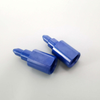
Description: What are blue zirconia ceramic pins? The blue zirconia ceramic pin is a special color zirconia ceramic pin. Compared with traditional white zirconia ceramics, blue zirconia ceramics have a blue appearance by adding specific metal ions or dyes. Features of
- Features: Specialty Ceramic
- Specialty Ceramic Type: Zirconia
-
Supplier: 3X Ceramic Parts Company Limited
Description: 96% Alumina Ceramic Nozzle Blown Discharge Advantages of alumina ceramic nozzle blown discharge : (1) High mechanical strength. The bending strength of alumina ceramic sintered products can reach 250Mpa, and that of hot pressed products can reach 500MPa. The
- Density: 3.5999977279425903 to 3.8999975386044725 g/cc
- Compressive / Crushing Strength: 290,073.678714394 psi
- Material Type: Alumina / Aluminum Oxide
-
Supplier: NETZSCH-Gerätebau GmbH
Description: PCE 428 - Pyrometric Cone Equivalent Because of the heterogeneity of their composition and structure, ceramic refractories do not exhibit a uniform melting point. The refractoriness is characterized by the optical determination of the pyrometric cone
- Test Media: Ceramics / Glass
- Display & Special Features: Computer Interface / Networkable
- Mounting / Loading Options: Laboratory / Batch
- Features: Other
-
Description: at a competitive price. More Materials: Our Advanced Ceramics include: Alumina (Al2O3) Ceramics Zirconia (ZrO2) Ceramics Beryllia (BeO) Ceramics Aluminum Nitride (AlN) Ceramics Silicon Nitride (Si3N4) Ceramics Hot Pressed Boron Nitride (HBN) Ceramics
- Density: 5.99999621323765 g/cc
- Oxide Type: Zirconia
-
Supplier: 3X Ceramic Parts Company Limited
Description: Application of Ceramic Metallization: Technical Methods of Ceramic Metal Sealing In industrial processing and production, there are two connection modes between the cutting tool blade and the tool rod: welding type and machine clamp type. The connection between the blade
- Material Type: Alumina / Aluminum Oxide
-
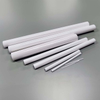
Description: What is beryllium oxide ceramic rod? Beryllium oxide (BeO) ceramic rods are made from beryllium oxide ceramics, a compound with the chemical formula BeO, known for its high melting point, low thermal expansion, and excellent electrical and thermal conductivity.
- Thermal Conductivity: 240 W/m-K
- Specialty Ceramic Type: Beryllia / Beryllium Oxide
- Applications: Electrical / HV Parts
- Shape / Form: Rod Stock
-
Supplier: 3X Ceramic Parts Company Limited
Description: 36 3 48 180 150 4 Remark All the above big-size ceramic plate can be cut to specific dimensions per customers' requirements. The description of industrial ceramic plates Industrial alumina ceramic plates are formed by tape casting, dry pressed or Isostatic pressed, and
- Thermal Conductivity: 39 W/m-K
- Compressive / Crushing Strength: 362,592.0983929925 psi
- Modulus of Elasticity: 55,113,998.95573486 psi
- Shape / Form: Bar Stock, Fabricated / Custom Shape, Rod Stock
-
Supplier: 3X Ceramic Parts Company Limited
Description: resistance: Zirconia ceramic is highly resistant to corrosion, making it suitable for use in harsh environments. Thermal stability: Zirconia ceramic has a high melting point and low thermal expansion coefficient, making it stable over a wide temperature range. Precise
- Density: 0.0000059992311142436085 g/cc
- Features: Specialty Ceramic
- Specialty Ceramic Type: Zirconia
-
Supplier: Umicore Metal Deposition Solutions
Description: Coating material Yttrium oxide Purity 99.99% Form Tablet Dimensions Ø 9.5 x 5 mm Quantity 500 g Theoretical density at 20°C in g/cm³ 5.0 Melting point in °C 2410 10⁻² mbar in °C ~ 2300 10⁻¹ mbar in °C ~ 2700 Boiling point in °C 4300-4440 Melting Possible Sublimation
- Length: 0.1968505 inch
- Diameter: 0.37401595 inch
- Density: 4.999996844364708 g/cc
- Width / O.D.: 0.37401595 inch
-
Supplier: Umicore Metal Deposition Solutions
Description: Coating material Yttrium oxide Purity 99.99% Form Tablet Dimensions 1.0 - 3.0 mm Quantity 500 g Theoretical density at 20°C in g/cm³ 5.0 Melting point in °C 2410 10⁻² mbar in °C ~ 2300 10⁻¹ mbar in °C ~ 2700 Boiling point in °C 4300-4440 Melting Possible Sublimation
- Diameter: 0.0393701 to 0.1181103 inch
- Density: 4.999996844364708 g/cc
- Width / O.D.: 0.0393701 to 0.1181103 inch
- Features: Specialty Ceramic
-
Supplier: Specialty Seal Group
Description: Ceramic-to-Metal End Seals Give Top Performance in Harsh Industrial Environments Specialty Seal Group (SSG) offers ceramic-to-metal seals a wide range of uses. Single- & Dual-Lead Seals Typical Applications: Industrial Heaters Terminating Power Cables Isolating Other High Heat
-
Supplier: Zhuhai Cersol Technology Co., Ltd.
Description: Zirconium Carbide is an important high-temperature structural material with high melting point, high strength and high corrosion resistance. It also has the characteristics of efficient absorption of visible light, reflection of infrared and energy storage.
- Material Type: Carbide Materials
-
Supplier: Umicore Metal Deposition Solutions
Description: Coating material Zirconium dioxide white Purity 99.3% Form Tablet Dimensions Ø 22 x 8 mm Quantity 1 kg Theoretical density at 20°C in g/cm³ 5.6 Melting point in °C 2700-2875 10⁻² mbar in °C 2400 10⁻¹ mbar in °C 2600 Boiling point in °C 4300-5000 Melting Possible
- Length: 0.3149608 inch
- Diameter: 0.8661422 inch
- Density: 5.5999964656884735 g/cc
- Width / O.D.: 0.8661422 inch
-
Supplier: Umicore Metal Deposition Solutions
Description: Coating material Zirconium dioxide grey-black Purity 99.3% Form Tablet Dimensions Ø 17.5 x 5 mm Quantity 500 g Theoretical density at 20°C in g/cm³ 5.6 Melting point in °C 2700-2875 10⁻² mbar in °C 2400 10⁻¹ mbar in °C 2600 Boiling point in °C 4300-5000 Melting Possible
- Length: 0.1968505 inch
- Diameter: 0.68897675 inch
- Density: 5.5999964656884735 g/cc
- Width / O.D.: 0.68897675 inch
-
Supplier: R. S. Hughes Company, Inc.
Description: 3M 3764 B clear hot melt adhesive is compatible with abs, acrylic, ceramic, chipboard, coated cardboard, foam, glass, plastic, polycarbonate, polyethylene and pvc materials. Additionally, this hot melt adhesive is a high melt adhesive with a melting point of +190.4 F.
- Viscosity: 6,000 cP
- Cure / Technology: Thermoplastic / Hot Melt
-
Supplier: R. S. Hughes Company, Inc.
Description: 3M 3764B clear hot melt adhesive is compatible with abs, acrylic, ceramic, chipboard, coated cardboard, foam, glass, plastic, polycarbonate, polyethylene and pvc materials. Additionally, this hot melt adhesive is a high melt adhesive with a melting point of +190.4 F.
- Viscosity: 6,000 cP
- Cure / Technology: Thermoplastic / Hot Melt
-
Supplier: ASTM International
Description: the thermoelements, permanently enclosed and sealed in a loose fitting metal or ceramic tube. 1.2.4 Type 3-Swaged assemblies in which a refractory insulating powder is compressed around the thermoelements and encased in a thin-walled tube or sheath made of a high melting
-
Supplier: R. S. Hughes Company, Inc.
Description: 3M 3764 PG clear hot melt adhesive is compatible with abs, acrylic, ceramic, chipboard, coated cardboard, foam, glass, plastic, polycarbonate, polyethylene and pvc materials. Additionally, this hot melt adhesive is a high melt adhesive with a melting point of +190.4 F.
- Viscosity: 6,000 cP
- Cure / Technology: Thermoplastic / Hot Melt
-
Supplier: R. S. Hughes Company, Inc.
Description: 3M 3764 AE clear hot melt adhesive is compatible with abs, acrylic, ceramic, chipboard, coated cardboard, foam, glass, plastic, polycarbonate, polyethylene and pvc materials. Additionally, this hot melt adhesive is a high melt adhesive with a melting point of +190.4 F.
- Viscosity: 6,000 cP
- Cure / Technology: Thermoplastic / Hot Melt
-
Supplier: Umicore Materials
Description: Specifications Coating material Aluminium oxide Purity 99.98% Form Tablet Dimensions Ø 12.5 x 7 mm Quantity 500 g Theoretical density at 20°C in g/cm³ ~ 4.0 Melting point in °C 2000-2072 Temperature at vapor pressure 10⁻² mbar in °C 2050 10⁻¹ mbar in °C 2200 Boiling point in °C
-
Supplier: Umicore Materials
Description: Specifications Coating material Yttrium oxide Purity 99.99% Form Tablet Dimensions Ø 9.5 x 5 mm Quantity 500 g Theoretical density at 20°C in g/cm³ 5.0 Melting point in °C 2410 Temperature at vapor pressure 10⁻² mbar in °C ~ 2300 10⁻¹ mbar in °C ~ 2700 Boiling point in °C
-
Supplier: Umicore Materials
Description: Specifications Coating material Yttrium oxide Purity 99.99% Form Tablet Dimensions 1.0 - 3.0 mm Quantity 500 g Theoretical density at 20°C in g/cm³ 5.0 Melting point in °C 2410 Temperature at vapor pressure 10⁻² mbar in °C ~ 2300 10⁻¹ mbar in °C ~ 2700 Boiling point in °C
-
Supplier: Umicore Materials
Description: Specifications Coating material Zirconium dioxide white Purity 99.3% Form Tablet Dimensions Ø 22 x 8 mm Quantity 500 g Theoretical density at 20°C in g/cm³ 5.6 Melting point in °C 2700-2875 Temperature at vapor pressure 10⁻² mbar in °C 2400 10⁻¹ mbar in °C 2600 Boiling point in
-
Supplier: Coperion K-Tron
Description: The Loss-in-Weight Belt Feeder FB130 combines the gentle material handling advantages of a belt feeder with the accurate control of a loss-in-weight system. It is ideal for feeding fragile products or powders with special characteristics, e.g. powders with very low melting
- Volumetric Capacity: 5.668062739000001 ft³/hr
- Material Type: Abrasives / Ceramics
- Feeder Type: Belt / Apron Feeder
- Common Features: Control Panel, Integral Hopper / Bin
-
Supplier: Zhuhai Cersol Technology Co., Ltd.
Description: Molecular formula: TiB2,CAS No.: 12045-63-5. Characteristic: ● Black hexagonal crystal or powder; tasteless. ● Excellent thermal stability, oxidation resistance and electrical conductivity. ● Density: 4.50-4.52, melting point: 2980 °c,hardness: 3600, oxidation resistance: 1100 °C
- Density: 4.499997159928238 to 4.519997147305697 g/cc
-
Supplier: JC Cherry, Inc.
Description: Vacuum Features Antioxidant Prevents the invasion of impurities Causes a special phenomenon (Discharge, Plasma)Lower melting point Hard heat cool-down Hard sound pass Hard electricity pass Insulation is improved
- Gender: Female / Jack, Male / Plug
-
Supplier: Zhuhai Cersol Technology Co., Ltd.
Description: Molecular formula: B4C Mohs hardness: 9.36 Density: 2.52g/cm ³ Melting point: 2450 °C Appearance: gray black powder. One of the hardest materials. It has become an ideal material for many industries because of its acid-base resistance, high temperature resistance Main
- Material Type: Boron Carbide, Carbide Materials
-
Supplier: Chatham Components, Inc.
Description: The SEFUSE brand SF-E and SF-R series thermal fuses are designed for high current applications. The thermal sensitive pellet in the SEFFUSE brand TCO liquefies when the temperature rises to the melting point of the thermal element. This, in turn, allows a spring action to
- Cutoff Temperature: 76 C
- Rated Voltage: 250 volts
- Rated Current: 2 amps
- Maximum Width of Case: 2.5000000000000004 mm
-
Supplier: Chatham Components, Inc.
Description: The SEFUSE brand SF-E and SF-R series thermal fuses are designed for high current applications. The thermal sensitive pellet in the SEFFUSE brand TCO liquefies when the temperature rises to the melting point of the thermal element. This, in turn, allows a spring action to
- Cutoff Temperature: 144 C
- Thermal Cutoff Style: Axial Leads





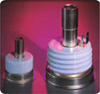


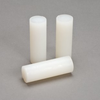


Find Suppliers by Category Top
Featured Products Top
-
 We are proud of our top-class technical capabilities among manufacturers of ceramics and high-melting-point metals in terms of both dimensional and geometric accuracy. There is no limit to the precision demanded by our customers, which is becoming more and more sophisticated as time and (read more)
Browse Ceramic Fabrication Services Datasheets for Top Seiko Co., Ltd. -
Fountyl manufactures a wide range of ceramic structural parts, including tubes, rods, substrates, plates, positioning pins, plungers, and pump valves. These components are widely used in melting furnaces (read more)
Browse Industrial Ceramic Materials Datasheets for Fountyl Technologies Pte. Ltd. -
Our Mullite insulating ceramic stands out due to its exceptional high melting point and outstanding thermal (read more)
Browse Specialty Ceramics Datasheets for Suntech Applied Materials (Hefei) Co.,Ltd -
refractory rings in the solidification zone, at this point, the temperature changes drastically. Therefore, it is crucial to protect the integrity of the split rings or the broken rings, as failure at this point will result in the casting loss. Boron Nitride, together with different additives, has a (read more)
Browse Industrial Ceramic Materials Datasheets for Xiamen Innovacera Advanced Materials Co., Ltd. -
Ceramic Reflector material properties: Bulk density (fired), Mg/m3:3.1 Color: White Porosity (apparent), % nominal: 22 Flexural strength (ASTM C1161, 3-point), MPa: 170 Thermal expansion coefficient 200-500C, 10-6/C 7 (read more)
Browse Reflectors Datasheets for Xiamen Innovacera Advanced Materials Co., Ltd. -
Great Ceramic’s Metallized Ceramic Parts for Brazing utilize proprietary Mo/Mn and Mo/Mn/W metallization coatings to enable robust, hermetic ceramic?to?metal brazed joints. These parts are compatible with a range of advanced ceramics, including alumina (Al?O?), aluminum nitride (Al (read more)
Browse Industrial Ceramic Materials Datasheets for Shenzhen Great Precision Ceramic CO., LTD. -
and plastic gears due to intense chemical, thermal and high vacuum conditions. They were considering technical ceramics for chemical resistance, however precision pinion gear teeth must be not only uniform, but strong enough to survive load. Solution: Based on fine features and point stresses (read more)
Browse Gear Manufacturing Services Datasheets for Insaco, Inc. -
With a considerably higher temperature, around twice that of traditional metal sheathed products, ignition times are reduced to as little as 60 seconds. This makes them significantly more economical in use. Ceramic Igniters For Solid Fuel Furnaces: Our special (read more)
Browse Industrial Heaters Datasheets for Xiamen Innovacera Advanced Materials Co., Ltd. -
Every wafer in a semiconductor fab is handled — picked, placed, transferred — by a robot end effector. It is the single point of contact between the automation system and the product. For decades, aluminum has been the standard material. But as wafer sizes grew and critical (read more)
Browse Industrial Ceramic Materials Datasheets for Fountyl Technologies Pte. Ltd. -
. Long Description with Bullet Points: Key Benefits of Ceramic Bearing Fans: (read more)
Browse Zirconium Oxide and Zirconia Ceramics Datasheets for Suntech Applied Materials (Hefei) Co.,Ltd
Conduct Research Top
-
Ceramic Nozzle For Atomization Of Steel
Boron Nitride ceramic nozzles are widely used in the processing of atomization of steel. As its high strength, high melting point, high toughness, and outstanding thermal shock resistance, steel powder manufacturers use Boron Nitride material to make the atomizing nozzle. Also, BN material has
-
How to Make Pyrolytic Boron Nitride Ceramic Part?
used material in high vacuum processes. Without showing melting point and high thermal conductivity, pyrolytic content is ideal to be used as vacuum furnace parts. The CVD process gives this PBN an almost perfect layered structure, which leads to anisotropic thermal conductivity, making it an ideal
-
Why do Alumina Ceramic Components have Spots and How to Prevent?
Alumina ceramic is a kind of ceramic material with a-al2o3 as the main crystal phase, because of its own high melting point, high hardness, heat resistance, corrosion resistance, and electrical insulation characteristics, it can be used in more stringent conditions. Alumina ceramics, with low price
-
Boron Nitride Ceramic Nozzle for Metal Powder Gas Atomization
Boron Nitride is an ideal material for atomizer nozzle due to its high strength, high melting point, high toughness, outstanding thermal shock resistance, excellent machinability, and low-friction properties. BN nozzles for the atomizing process may ensure a continuous flow with no blockage
-
High-Temperature Co-Fired Ceramics(HTCC)
HTCC ceramic heating element is the abbreviation of High-temperature co-fired ceramics. It is made of tungsten, molybdenum, molybdenum, manganese and other high melting point metal heating resistor paste printed on 92%~96% alumina cast ceramic green body according to the requirements of heating
-
A Brief Introduction to HTCC
HTCC (High Temperature co-fired Ceramic) adopts tungsten, molybdenum, molybdenum, manganese, and other High melting point metal heat resistance paste printed on 92 ~ 96% alumina flow Ceramic green billet according to the design requirements of heat circuit, 4 ~ 8% sintering agent and then laminated
-
Properties Of Boron Carbide
(theoretical density is only 2.52 g / cm3), which is lighter than ordinary ceramic materials and can be used in the aerospace field. Boron carbide has strong neutron absorption capacity, good thermal stability, and a melting point of 2450 C, so it is also widely used in the nuclear industry.
More Information Top
 Indicates content that may require registration and/or purchase.

-
Mechanical engineering
The high melting points of ceramic materials cause that the ceramics with a help of the powder technology are processed.
-
Sintering and joining of low temperature co-fired tungsten and aluminum oxide
…this chapter, several strategies for bonding W and A1203 will be examined at low firing temperatures, including conventional joining processes, as well as a class of new techniques concerned with the use of a low melting point ceramic additive, particularly Na2Si03,that…
-
Surface modification technologies V
1 We have coated graphite substrates with titanium carbide, an extremely hard (HV 20-30 GPa) high melting point ceramic material that is frequently applied to reduce wear.
-
Critical Issues for Producing UHTC-Brazed Joints: Wetting and Reactivity
They have been shown to occur, at the microscopic scale, in many systems at high temperature, even with high melting point ceramic materials and with systems which, at the macroscopic scale, are considered as non-reactive (Ref 78, 82, 97-102).
-
Handbook of Thin-Film Technology
In particular, with the process- ing of high melting point ceramic materials, the kinetic energy of the particles represents a de- termining factor in the case of collision with the substrate, and the film quality regarding adhesion and porosity.
-
Growth and Microstructure‐Dependent Hardness of Directionally Solidified WC –W 2 C Eutectoid Ceramics
Laser surface processing can be utilized to directionally solidify high melting point ceramic composites.11–14 Laser- .
-
Study on direct fabrication of ceramic shell mold with slurry-based ceramic laser fusion and ceramic laser sintering
Both processes are somewhat similar to SLS in the principle of using laser scanning to fabricate parts, but use slurry, which was composed of a structural material (high melting point ceramic powder) and an inorganic binder (low melting point ceramic powder).
-
Cell‐Assisted Deposition of Inorganic Coatings
At 500°–600°C the nanoparticles already developed enough bonding with the substrate to form a quite stable layer, even in the case of a high melting point ceramic material like YFSZ.
-
Preparation of mullite fibres by sol–gel processes using aluminium carboxylates and tetraethylorthosilicate
Conventionally, melt spin- ning methods are adopted for the synthesis of low melting point ceramic fibres.