
Products & Services
See also: Categories | Featured Products | Technical Articles | More Information-
Supplier: SCHOTT AG
Description: glass manufactured by SCHOTT using a special down-draw method that the company developed on its own. This makes it possible to manufacture products of between 0.03 mm and 1.1 mm in thickness. SCHOTT offers B 270® i crown glass in sheet glass form to meet a wide variety of
-
Supplier: Newport MKS
Description: The F-SM1500-4.2/125 Single-Mode Fiber is an all-glass highly bend insensitive and photosensitive fiber for FBG sensor arrays and supports single-mode light propagation for a 1550 - 1650 nm operating wavelength range. This low attenuation, step-index fiber has a uniform core refractive
- Wavelength: 1,550 to 1,650 nm
- Numerical Aperture: 0.29 to 0.31
- Maximum Attenuation: 1.5 dB/km
-
Supplier: Hamamatsu Photonics Europe
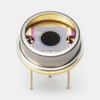
Description: Large area, high-speed PIN photodiode for UV to near IR photometry The S12271 is a high-speed Si PIN photodiode having a large photosensitive area of φ4.1 mm. Using quartz glass as the light input window, this photodiode delivers high sensitivity extending to the UV region and is
- Sensitivity: 0.5 A/W
- Spectral Response Range: 190 to 1,100 nm
- Active Area Diameter or Length: 4.1000000000000005 mm
- Active Area Height: 4.1000000000000005 mm
-
-
Supplier: Chivine Resources, Inc.
Description: Cerium(IV) oxide, also known as ceric oxide, ceria, cerium oxide or cerium dioxide, is an oxide of the rare earthmetal cerium. It is a pale yellow-white powder with the chemical formula CeO2. Cerium(IV) oxide is used in ceramics, to sensitize photosensitive glass, as a catalyst and as
- Features: All Non-Metals, Other, Oxides, Rare Earths
-
Supplier: SPIE - Education
Description: the course is to describe features of photosensitive optical glass , properties of VBGs, principles of gratings modeling and design, main types of optical components based on VBGs, and amazing results of their use in lasers and photonic devices. People who want to bring lasers and
- Type: Course
- Delivery: On-site / In Plant
- Technology / Subject Expertise: Photonics / Optics
-
Supplier: Fischer Technology, Inc.
Description: (anti-fingerprints), solar cell coatings (thin film layers, CdTe/ glass), gold coatings on plug contacts, lead in solders on solder pads, trace analysis, photosensitive coatings, oil and wax layers (BETASCOPE®) Measurement of copper coatings on surfaces and through-holes (SIGMASCOPE®)
- Graduation / Resolution: 0 to 0.0787402 inch
- Resolution: 0 to 0.0787402 inch
- Mounting / Loading Options: Benchtop / Floor
- Features: Coating Thickness, Eddy Current / Electromagnetic, Wet Film Thickness
-
Supplier: ECOPTIK (CHANGCHUN) LTD
Description: an ultraviolet filter. Because too much ultraviolet light will affect the image quality, it is one of the must-haves for traditional photographers, but for the owners of digital video cameras and digital cameras. Said, because it is a CCD photosensitive element imaging, not as sensitive to
- Type: Specialty / Other




Find Suppliers by Category Top
Featured Products Top
-
precisely where its key value lies in laser module packaging, camera modules, and photo-sensitive sensors. (2) Excellent heat dissipation performance: Rapid heat release (3?Black alumina, due to the addition of carbon-based or metal oxide particles with higher thermal conductivity (read more)
Browse Aluminum Oxide and Alumina Ceramics Datasheets for Xiamen Innovacera Advanced Materials Co., Ltd.
Conduct Research Top
-
Photochromic LC-polymer Composites Containing Azobenzene Chromophores with Thermally Stable Z-isomers
, there are methyl substituents in both positions ortho to the azo group. This substitution significantly increases the thermal stability of the photoinduced Z-form. The first type of novel photosensitive composite is a glass cell filled with cholesteric polymer-stabilized layers produced by thermal
More Information Top
 Indicates content that may require registration and/or purchase.

-
Femtosecond Laser Micromachining
15 Microstructuring of Photosensitive Glass ..
-
Photon-based Nanoscience and Nanobiotechnology
S.D. Stookey, “Chemical Machining of Photosensitive Glass ,” Ind. Eng. Chem., Vol. 45, (1953) 115.
-
Microstructuring of Glasses
It focuses on methods of glass structuring, using various types of lasers, as well as on structuring of photosensitive glasses .
-
Three-dimensional micromachining of glass using femtosecond laser for lab-on-a-chip device manufacture
ABSTRACT Three-dimensional (3D) micromachining of photo- sensitive glass is demonstrated by photochemical reaction using femtosecond (fs) laser for lab-on-a-chip application.
-
Photodichroic Silicate Glass Surface
… is potentially a pin -hole -free recording material due to the inherent homogeneity of the silicate glasses, and to the very small sizes of the photosensitive crystals, relative to the wavelength of light and the thickness of the photosensitive glass surface layer.
-
3D microstructuring of glass by femtosecond laser direct-writing for micro-TAS application
Three-dimensional (3-D) microstructuring of photosensitive glass is demonstrated by using femtosecond (fs) laser for Lab.-on-chip, in other words, micro total analysis system (i-TAS), application.
-
Effect of ions with different radii on the properties of lithium aluminosilicate photosensitive devitrified glasses
The in- troduction of barium oxide with an ionic radius greater than that of the strontium ion, the dielectric characteristics of the photosensitive glass should be improved.
-
Glass‐Ceramics by Photosensitive Processes
In this study, we will describe two new photosensitive glass ‐ceramic materials: (1) Fotoform as a tunable CTE material and (2) a new photosensitively produced nepheline phase glass‐ceramic.
-
Fabrication of 3D microfluidic structures inside glass by femtosecond laser micromachining
Two kinds of glasses are currently used for this process, one of which is fused silica [10, 17, 20] while the other, photosensitive glass [11, 12, 16, 18, 19, 21].