
-
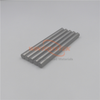
Description: Boron Carbide is a boron-carbon ceramic that is exceedingly hard. Boron Carbide has a high hardness, ranking third only to diamond and Cubic Boron Nitride. Boron Carbide is the third hardest substance known as of 2015, after diamond and Cubic Boron Nitride, earning it the
- Specialty Ceramic Type: Boron Carbide
- Shape / Form: Rod Stock
- Features: Specialty Ceramic
-
Supplier: Plansee SE
Description: cathodes made from titanium-aluminum, aluminum-chromium, chromium, titanium, zirconium, tungsten carbide and titanium diboride.
- Type: Sputtering Target
-
Description: Boron Nitride (HBN) Ceramics Pyrolytic Boron Nitride (PBN) Ceramics Silicon Carbide (SiC) Ceramics Boron Carbide (B4C) Ceramics Titanium Diboride (TiB2) Ceramics Cerium Hexaboride (CeB6) Ceramics Lanthanum Hexaboride (LaB6) Ceramics Macor Machinable Glass Ceramics Customized and
-
-
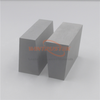
Description: Boron Nitride (HBN) Ceramics Pyrolytic Boron Nitride (PBN) Ceramics Silicon Carbide (SiC) Ceramics Boron Carbide (B4C) Ceramics Titanium Diboride (TiB2) Ceramics Cerium Hexaboride (CeB6) Ceramics Lanthanum Hexaboride (LaB6) Ceramics Macor Machinable Glass Ceramics Customized and
- Density: 2.499998422182354 g/cc
- Shape / Form: Block
- Specialty Ceramic Type: Boron Carbide
- Features: Specialty Ceramic
-
Description: Boron Nitride (HBN) Ceramics Pyrolytic Boron Nitride (PBN) Ceramics Silicon Carbide (SiC) Ceramics Boron Carbide (B4C) Ceramics Titanium Diboride (TiB2) Ceramics Cerium Hexaboride (CeB6) Ceramics Lanthanum Hexaboride (LaB6) Ceramics Macor Machinable Glass Ceramics Customized and
- Specialty Ceramic Type: Boron Carbide
- Shape / Form: Plate / Board (e.g., Fiberboard), Tile
- Features: Specialty Ceramic
-
Supplier: Transcat, Inc.
Description: Highly durable because of carbide-tipped contact points (anvils). Measurement can be taken closer to the bottom of the blind bore. Can measure deep holes using an Extension rod (optional) which is available on models over 6mm (.275") measuring range. With Ratchet Stop for constant
- Gage / Instrument Type: Micrometer
-
Supplier: Transcat, Inc.
Description: carbide-tipped contact points (anvils) Measurement can be taken closer to the bottom of the blind bore Can measure deep holes using an Extension rod (optional) which is available on models over 6mm (.275") measuring range With Ratchet Stop for constant force Setting Rings for zero
- Range: 0.275 to 0.35 inch
- Gage / Instrument Type: Bore Gage
-
Supplier: Transcat, Inc.
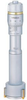
Description: Supplied in fitted wooden case. Contact point: Carbide or titanium coating* (*over 12mm/.5" models)
- Range: 0.9842525 to 1.181103 inch
- Gage / Instrument Type: Bore Gage
-
Supplier: Transcat, Inc.
Description: Supplied in fitted wooden case. Contact point: Carbide or titanium coating* (*over 12mm/.5" models)
- Range: 0.4724412 to 0.6299216 inch
- Gage / Instrument Type: Bore Gage
-
Supplier: 3X Ceramic Parts Company Limited
Description: Silicon Carbide SSiC Pump Shaft SSiC Pump Shaft is produced using very fine SiC powder containing sintering additives. It is processed using forming methods typical for other ceramics and sintered at 2,000 to 2,200° C in an inert gas atmosphere. As well as fine-grained versions, with grain
- Density: 3.0999980435061194 to 3.149998011949766 g/cc
- Thermal Conductivity: 125.52471714534 W/m-K
- Compressive / Crushing Strength: 319,081.0465858334 psi
- Features: Carbide Materials
-
Supplier: 3X Ceramic Parts Company Limited
Description: Silicon carbide carrier disk, silicon carbide etching disk, ICP etching disk Silicon carbide tray for LED etching (SiC tray) φ 600mm is a special accessory for deep silicon etching (ICP etching machine) Wafer carrier, also known as wafer carrier and silicon wafer carrier, is
- Density: 3.119998030883578 g/cc
- MOR / Flexural Strength: 56,564.36734930683 psi
- Compressive / Crushing Strength: 261,066.3108429546 psi
- Features: Carbide Materials
-
Supplier: 3X Ceramic Parts Company Limited
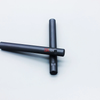
Description: composites. Pressureless silicon carbide firing rod SiC ceramic round rod silicon carbide shaft rod customized by the manufacturer. Silicon Carbide was originally produced by a high temperature electro-chemical reaction of sand and carbon. Silicon
- Density: 3.149998011949766 g/cc
- Compressive / Crushing Strength: 319,081.0465858334 psi
- Features: Carbide Materials
- Shape / Form: Rod Stock
-
Supplier: General Carbide Corporation
Description: Cobalt. Nickel. Tantalum. We offer them all. In fact, we produce more than 50 carbide grades in a wide range of binder concentrations and particle sizes. We also lead the industry with the tightest overall material specifications. Our tungsten carbide grades use cobalt binders ranging
- MOR / Flexural Strength: 500,000 psi
- Density: 14.440000000000001 to 14.56 g/cc
- Applications: Abrasive / Erosive Wear Protection, Ceramics / Glass Manufacturing, Chemical / Materials Processing, Corrosion Protection, Wear Parts / Tooling
- Shape / Form: Bar Stock, Block, Fabricated / Custom Shape, Preforms, Rod Stock, Roller / Roll, Tube Stock
-
Supplier: General Carbide Corporation
Description: Cobalt. Nickel. Tantalum. We offer them all. In fact, we produce more than 50 carbide grades in a wide range of binder concentrations and particle sizes. We also lead the industry with the tightest overall material specifications. Our tungsten carbide grades use cobalt binders ranging
- MOR / Flexural Strength: 535,000 psi
- Density: 13.870000000000001 to 14.01 g/cc
- Applications: Abrasive / Erosive Wear Protection, Ceramics / Glass Manufacturing, Chemical / Materials Processing, Corrosion Protection, Wear Parts / Tooling
- Shape / Form: Bar Stock, Block, Fabricated / Custom Shape, Preforms, Rod Stock, Roller / Roll, Tube Stock
-
Supplier: CoorsTek
Description: alumina: increased strength and impact resistance SILICON CARBIDES Silicon carbides offer superior wear at high temperatures, yielding a long life in the most abrasive environments. CoorsTek can manufacture intricate and large shaped designs to meet your specifications. CoorsTek
- Thickness / Wall Thickness: 2 inch
- Length: 9 inch
- Diameter: 4 inch
- Density: 3.1 to 4.01 g/cc
-
Supplier: General Carbide Corporation
Description: Cobalt. Nickel. Tantalum. We offer them all. In fact, we produce more than 50 carbide grades in a wide range of binder concentrations and particle sizes. We also lead the industry with the tightest overall material specifications. Our tungsten carbide grades use cobalt binders ranging
- MOR / Flexural Strength: 490,000 psi
- Density: 14.16 to 14.280000000000001 g/cc
- Applications: Abrasive / Erosive Wear Protection, Ceramics / Glass Manufacturing, Chemical / Materials Processing, Corrosion Protection, Wear Parts / Tooling
- Shape / Form: Bar Stock, Block, Fabricated / Custom Shape, Preforms, Rod Stock, Roller / Roll, Tube Stock
-
Supplier: General Carbide Corporation
Description: Cobalt. Nickel. Tantalum. We offer them all. In fact, we produce more than 50 carbide grades in a wide range of binder concentrations and particle sizes. We also lead the industry with the tightest overall material specifications. Our tungsten carbide grades use cobalt binders ranging
- MOR / Flexural Strength: 515,000 psi
- Density: 14.530000000000001 to 14.65 g/cc
- Applications: Abrasive / Erosive Wear Protection, Ceramics / Glass Manufacturing, Chemical / Materials Processing, Corrosion Protection, Wear Parts / Tooling
- Shape / Form: Bar Stock, Block, Fabricated / Custom Shape, Preforms, Rod Stock, Roller / Roll, Tube Stock
-
Supplier: Hyperion Materials & Technologies
Description: Cemented tungsten carbide coolant blank with central hole. Options on carbide grade, rod diameter, coolant hole diameter, length, finish, and chamfer.
- Shape / Form: Rod Stock
- Carbide Type: Tungsten Carbide (WC)
-
Supplier: CoorsTek
Description: Magnesia partially stabilized YTZP: Yttria partially stabilized zirconia Dura-Z™ Zirconia Silicon Carbide (SiC) Direct-Sintered Reaction-Bonded Nitride-Bonded Other Silicon Carbide Materials CoorsTek tubes and rods are utilized in the following markets: Aerospace & defense
- Density: 2.8 to 6.02 g/cc
- Thermal Conductivity: 2.2 to 30 W/m-K
- MOR / Flexural Strength: 20,015.0838312932 to 130,533.155421477 psi
- Compressive / Crushing Strength: 79,770.2616464584 to 377,095.782328712 psi








Find Suppliers by Category Top
Featured Products Top
-
 Expanding Possibilities with Advanced Internal Threading Solutions Internally threading hard materials like sapphire, silicon carbide, quartz, zirconia, and alumina has long been a machining (read more)
Browse Threaded Rod Datasheets for Insaco, Inc. -
blasting finishing technique that uses various blasting materials to achieve a specific finish to a metal’s surface. Common sandblasting media included steel shot, silicon carbide and glass beads which are shot at high speeds through a machine nozzle over a surface until it is sanded smooth (read more)
Browse Finishing and Surface Treatment Services Datasheets for Eagle Stainless Tube & Fabrication, Inc.
More Information Top
 Indicates content that may require registration and/or purchase.

-
Fabrication of titanium carbide and diboride specimens by the method of self-propagating high-temperature synthesis for plasma-arc growth of single crystals
A study of the distribution of iron impurity over titanium diboride and titanium carbide rods has shown that the impurity in the combustion product is distributed nonuniformly [12].
-
THE OXIDATION OF ZIRCONIUM CARBIDE IN HIGH-TEMPERATURE COMBUSTION GASES*
The zirconium carbide rods had densities in the range 5· 98-6' 24 g./c.c. and the titanium carbide rods densities of ,-...J .
-
Sintering operations in Karbid‐Kobalt‐Legierungen with 0,2 to 15 % cobalt
The mixing carbide and lie rod containing titanium carbide lower in the coercive force.
-
Dynamic Aspects of Explosion Phenomena > Shock Waves in Self-Propagating High-Temperature Synthesis Research
The products of afterburning and structuring represented the densely packed rods of titanium carbide or boride.
-
Some properties of single crystals of titanium carbide
Sintered (porosity 40-60%) rods of titanium carbide were used as the initial specimens.
-
Bhabha Atomic Research Centre Studies in Cold Fusion
They were typically a fraction of a gram in mass and were machined from a titanium rod using tungsten carbide tools with a continuous cooling ar- rangement.
-
Classification of methods and processes for the manufacture of high-porosity sintered materials. Part 1
In the work reported in [42], titanium carbide crucibles and rods up to 60 mm high, with a porosity of up to 50-60%, were produced by this process.
-
Selected bibliography for the extraction of uranium from seawater: chemical process and plant design feasibility study
Other uses of titanium-bearing raw materials are for manufacturing welding rod -coatings, titanium carbides , ceramics, chemicals, and various other products.
-
Single crystal growth of the modified spinel (β) and spinel (γ) phases of (Mg,Fe)2 SiO4 and some geophysical implications
rods and disks ( titanium carbide ), and a thermocouple, as shown in Figure 3.
-
The sintering of technical boron carbide
In our work, the sheath and the push rod were made of titanium carbide by the method of extrusion and subsequent sintering.