Elapsed Time Indicators (ETIs) Information
Last revised: October 30, 2024
Reviewed by: Scott Orlosky, consulting engineer
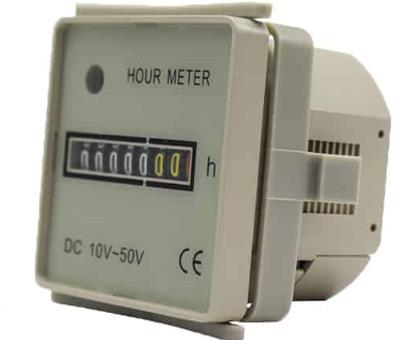
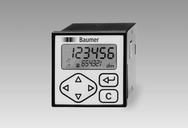 Elapsed time indicators (ETIs) monitor, record, and display the passage time. They are deployed in applications where this is an important operational parameter. The most common type of ETI is the hour meter, which documents the running time of powered equipment.
ETI feedback allows operators to make adjustments for optimal use of time and resources. ETIs are common on machinery to monitor cumulative usage. This provides insight as to the probable operational reliability up the machine, especially for equipment that needs regular maintenance and upkeep. ETIs are also useful for monitoring processes that need to be timed or interrupted. Using an ETI for such functions often correlate to improved productivity and safety.
Hour meters are prominent in industrial vehicles and other equipment outfitted with engines or AC motors, and sometimes in medical and recreational machinery. Such ETIs measure the total operational time of the monitored machinery, including idle and standby time, which enables estimates of wear and tear on the equipment. Modes of operation often include countdown, count-up, alarm and memory.
Specific reasons to use ETIs include:
- Maintenance and service: The need for preventative maintenance can be monitored with an ETI to help prevent downtime.
- Warranties: Some manufacturers specify operating hours for warranties, instead of days, months, or years.
- Sales: Providing running hours to prospective buyers of used equipment provides clarity on the age and condition of the equipment.
- Rental: Equipment rental services often lease equipment in hour increments, and the ETI ensures customers comply to this agreement.
Types
There are several different types of elapsed time indicators: external, integral and aftermarket. External ETIs are handheld or standalone, and are manually activated by the operator. Integral elapsed time indicators are incorporated into the machinery by the manufacturer. Many higher end tractors, for example, would include an integral ETI. Aftermarket ones can be purchased separately from the equipment and installed later.
Specifications
- Power: AC or DC power, as well as batteries that may be rechargeable.
- Display: Times are displayed by an LCD or LED screen, or by an electromechanical or vibration analog meter. Analog types are clearer outdoors and can hold values during power interruptions, but are usually only suitable for count-up applications. LCD and LED screens are more compact overall and more easily integrated.
- Resolution: the smallest increment of countdown/count-up.
- Memory: The device can recall saved times for ease of use and time comparison.
- Interface: buttons, a remote, or another input configures settings and options.
- Non-resettable: the operator cannot reset the count or alter its mode of operation.
- Number of digits / maximum value: the largest value the ETI can display.
- Tolerance: the acceptable amount of mismeasurement while still being considering in-specification.
- Outdoor rated: The device possesses a NEMA rating and is operable at temperature extremes and in the rain.
Features
 Elapsed time indicators support a broad scope of features to choose from, including:
- Memory
- Quiet operation
- Multiple voltages
- Multiple frequencies
- Variable mounting styles
- Transient voltage protection
- Reverse polarity
- Load dump
- Custom bezels
- Pulse counter option
- Run indicator
- Wire leads
- Specialty material and custom lenses
- Single or dual display monitors
- Low power
- Automatic recycle to zero
- Shock resistant
- Tamper-proof casing
- Custom logo dials
- Nonvolatile data backup
Applications
Elapsed time indicators are often employed on:
- Boom lifts
- Garden tractors
- Utility vehicles
- Generators
- Construction equipment
- Material handling equipment
- Recreational vehicles
- Electronic panels
- Rental equipment
- Pressure washers
- Sweepers
- Test equipment
- Vending machines
- Floor cleaning equipment
- Instrument panels
- Office equipment
- Air conditioning equipment
- Furnaces
- Control panels
- Lighting systems
- Lab test equipment
- Sun tanning equipment
- Compressors and pumps
- Refrigeration
Selection
Electromechanical ETIs feature superior accuracy over extended periods as they track total operational duration. Analog meters are sometimes noisier than the digital display alternatives and are subject to wear. Three-terminal LCD meters are well suited for calculating running time for systems with short on/off cycles.
Standards
- UL listed
- UL recognized
- CSA certified
- CE certified
- CE mark
- MIL-M-3971 conformance (electrical, non-hermetically sealed)
Elapsed Time Indicators (ETIs) FAQs
What are the key differences between mechanical and electronic ETIs?
Mechanical ETIs are robust and suitable for harsh environments but may lack precision. Electronic ETIs are more compact, accurate, and easily integrated into various systems, often providing additional functionalities.
What are the benefits of using an elapsed time indicator?
- Maintenance Scheduling: ETIs help track when equipment is due for maintenance, they can reduce downtime and signal when excessive wear may trigger a maintenance cycle.
- Efficiency Monitoring: They provide insight into the operational efficiency and usage of equipment.
- Safety: Regular monitoring ensures timely replacement of parts, improving overall safety.
- Cost Savings: By preventing breakdowns and optimizing maintenance, ETIs can reduce operational costs.
Can elapsed time indicators be reset?
Some ETIs can be reset manually, while others are designed to be non-resettable to provide an accurate lifetime operation count for the equipment.
What power sources do elapsed time indicators use?
ETIs can be powered by:
- AC/DC power (connected to the system or equipment being monitored)
- Battery (for portable or isolated systems)
- Mechanical movement (in older models)
What are the common display formats for ETIs?
The most common display formats are:
- Analog (rotating dials or hands)
- Digital (LCD or LED display)
- Mixed (electromechanical with both digital and mechanical components)
Elapsed Time Indicators (ETIs) Media Gallery
References
GlobalSpec—Handbook of Dimensional Measurement, Fourth Edition
GlobalSpec—Height Gages
GlobalSpec—Plug and Pin Gages
GlobalsSpec—Inspection Services
GlobalSpec—Dimensional Gages and Instruments
Image credit: