
Condensate Polishers Information
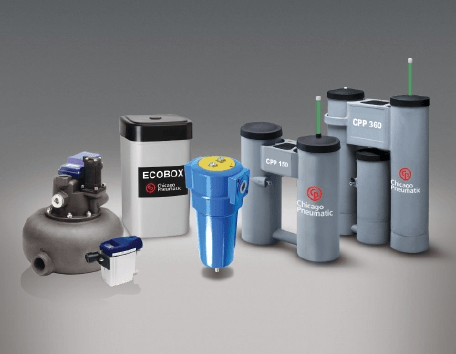 Condensate polishers remove mineral contaminants that can limit performance and reduce system life in:
- boilers
- heat exchangers
- HVAC cooling towers
- steam turbines
- nuclear power plants
- industrial processes
Features
These mineral contaminants include dissolved alkaline solids such as calcium carbonate (CaCO3), a chemical compound that causes scale to develop on the inside of pipes and steam lines. If left untreated, calcium carbonate can “choke” these conduits and allow iron, copper, and other contaminants to wash back into the cooling water. Condensate polishers can thus help to limit corrosion and reduce the amount of makeup water that is needed.
Most condensate polishers are filled with polymer resins that are used to remove or exchange ions so that the purity of the condensate is similar to that of distilled water. Ion exchange removes the unwanted ions from a liquid and replaces them with these resin-specific ions. Most ion exchange resins are porous, cross-linked polystyrene beads. Styrene ion exchange resins are also available. In condensate polishers, the ion exchange process can also help control fuel and energy costs. As contaminants are removed from the condensate, heat transfer improves. In the case of a boiler system, for example, less heating is required to produce high-quality boiler feedwater.
Specifications
Condensate polishers are available in a range of large, self-contained packages. Specifications such as flow rate and controller type are important to consider. Flow rate describes system performance while the condensate polisher is running at an optimal, steady-state condition. In environments where the equipment often runs discontinuously, however, systems should be designed for the most efficient use and to account for periods of peak flow. There are two basic control systems for condensate polishers: manual and automatic. Manual control systems require manual backwashing or periodic flushing to regenerate the exchange medium. Automatic control systems automatically backwash or flush the exchange medium based on parameters such as time, volumetric operation, and chemical sensing.
Applications
Condensate polishers are used in various applications and industries. Products for food, medical, and sanitary applications are designed to comply with industry standards or government regulations for purity. Condensate polishers for industrial applications such as electronic component manufacturing and automotive painting are also available.
Related Information
CR4 Community—Polishing Zircalloy
CR4 Community—Heat Exchangers with Condensate Pot
CR4 Community—Vonax Polishing Compound
Image credit:
- condensate polishing system
- Boiler Water Condensate Polisher Ion Exchange Precoat filter
- Boiler Water Condensate Polisher Iron Removal
- Condensate Polishing activated carbon
- Condensate Polishing cartridge filter
- Condensate Polishing demineralizer
- Cooling Tower Condensate Polisher ultrafiltration membrane
- ultrasonic polishing equipment