
RF Repeaters Information
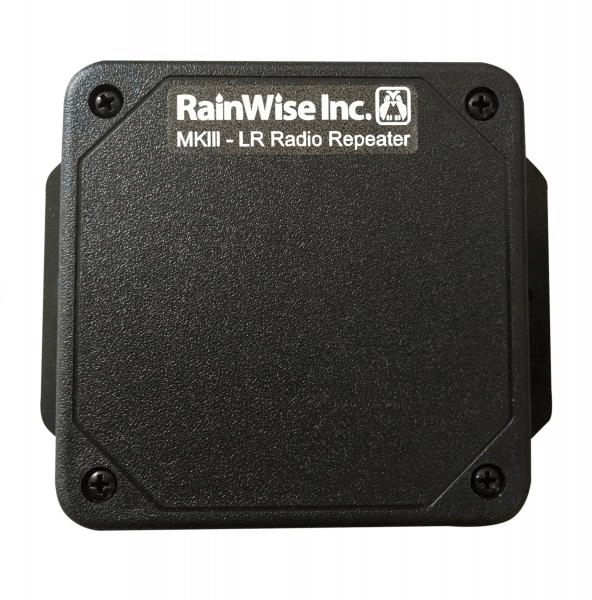 RF repeaters have independent paths for reception and transmission, through which they collect and send signals to antennas and other stations. Radio frequency (RF) repeaters, or RF repeaters, are communication devices designed to amplify or regenerate data signals in order to transfer telecommunication signals from one terminal to another. The purpose of an RF repeater is to amplify and reconstruct the signal so that it can be sent over a longer distance than would be possible without the repeater. RF repeaters are bidirectional amplifiers that, when located between two antennas, relay signals in remote locations, or in order to bypass obstructed paths.
Types of RF Repeaters
RF repeater types include:
- microwave RF repeaters
- linear RF repeaters
Both types of devices can overcome signal-blocking impediments such as mountains, large buildings, structures that obstruct base station signals, or the distance to the base station.
Features
RF repeaters are available for both electronic and optical signals and can support a wide range of modulation formats and traffic capacity. RF repeaters are generally located at higher elevations, such as on a mountain or tall building. RF repeaters are equipped with large antennas, feedlines, a transmitter, and a receiver. RF repeaters can contain one or more amplifiers. RF repeaters may also contain signal generators, frequency converters, modulators, signal processors, and power supplies. Often, RF repeaters are powered by solar or wind-based energy sources. Microwave repeaters can transfer signals without lessening quality, data, or traffic. The range of a microwave repeater is generally for frequencies from 1.5 GHz to 11 GHz, with the most popular telecom bands being 6 GHz, 7 GHz, and 8 GHz. A linear RF repeater is compatible with a wide range of modulation formats.
Applications
RF repeaters such as a microwave RF repeater or linear RF repeater are commonly used by:
- telecommunications system operators
- telephone companies
- wireless operators
- energy companies (water, gas, electric)
- government agencies (including national, state, county, and local agencies)
- military
- aviation
- national security organizations
Such users expect reliable operation; areas of prime concern include path reliability, repeater-equipment reliability, and power-equipment reliability. The AT&T Short Haul standard is the most commonly used reference.
Related Information
IEEE Spectrum—Electronic Noise Is Drowning Out the Internet of Things
IEEE Spectrum—Digital Radio Takes to the Road