Building SANs with Brocade Fabric Switches

This reference functions as a set of instructions for actual SAN implementation and teaches how a well-crafted SAN can reward your organization.
 TABLE OF CONTENTS
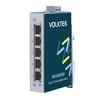
 Fibre Channel hubs are used to connect simple FC-AL environments. Hubs were the original interconnect mechanism used for Fibre Channel, and provide connectivity between nodes in a loop. A hub connects ports, sending frames between individual ports but not routing them to other ports. Simple hubs do this electrically, and more intelligent hubs might also switch frames through the loop. Switched hubs do not implement a switched fabric protocol, but they still maintain the FC-AL environment. As a result, they have most of the same reliability, scalability, performance, and manageability limits of unmanaged hubs. For this reason, switched fabric is becoming the dominant SAN technology. However, for low-end installations, hubs can offer a less-expensive alternative to switches. If you need to scale your SAN at some point in the future, consider buying an entry-level switch instead of a hub.
This section briefly describes the different kinds of hubs and their major features and how hubs are best used in your network.
Simple electrical hubs consist of a simple series of circuits that detect whether a connection has been plugged into a port on the hub. Think of a hub as being a feature-rich wire. A resilient-loop circuit simply completes a connection to ensure that a loop is continuous throughout the hub. Simple hubs generally support only copper and do not include any software functionality. Although these hubs are still available, they are used only in the simplest of configurations due to their lack of fault...