Piping Materials Guide: Selection and Applications
The methods of manufacturing seamless steel pipe vary slightly from manufacturer to manufacturer, but these are the basic stages.
High-quality rounds are required for seamless tubular products (see Figure 4.14).
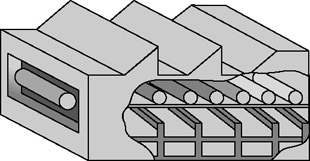
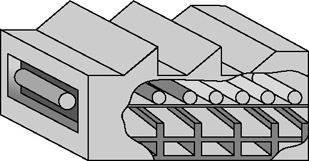
The rounds are cut to the required length and weighed prior to being reheated in a furnace (see Figure 4.15).
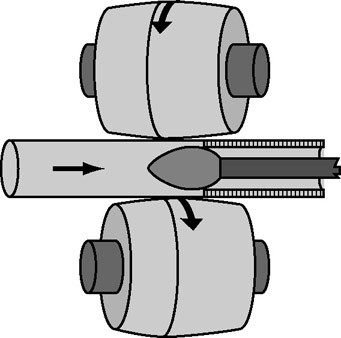
The round billet is gripped by the rolls, which rotate and advance it into the piercer point, which creates a hole through its length (see Figure 4.16).
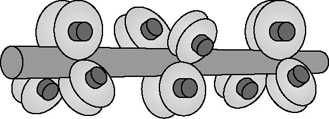
The pipe is rolled using several stands over a long, restrained mandrel (see Figure 4.17).
The MPM shell is transferred to a reheat facility, where it can be cropped and weighed prior to reheating (see Figure 4.18).
The reheated and descaled pipe is conveyed through a stretch reducing mill, which utilizes up to 24 stands to reduce the diameter to the required finished size (see Figure 4.19).
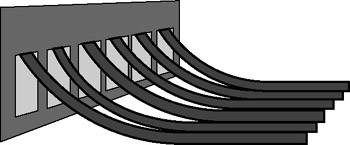
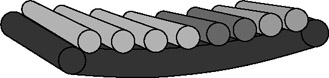
The pipe lengths are placed on cooling bed (see Figure 4.20).
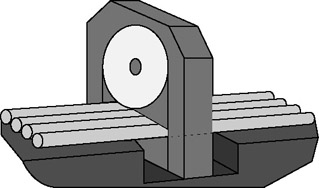
After cooling, batches of the as-rolled mother pipe are roller conveyed in parallel to carbide tipped batch saws for cropping into specified lengths (see Figure 4.21).