WarDriving & Wireless Penetration Testing

This chapter discusses how antennas work and how to choose the right antenna for conducting wireless network penetration testing. It also examines the various types of antennas and their related devices. The Institute of Electrical & Electronics Engineers (IEEE) standard for wireless Ethernet networking is 802.11. Contained within 802.11 are the three most commonly used network types: 802.11a, 802.11b, and 802.11g. The terms wireless networks, 802.11, and wireless Ethernet are used interchangeably throughout this chapter. The terms cable, wire, and transmission line are also used interchangeably.
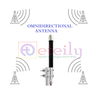
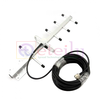
What is an antenna? Antennas are everywhere, from small antennas on cell phones and walkie-talkies, to huge television and commercial radio transmission aerial antennas that climb thousands of feet into the air. However, the actual function of an antenna is a mystery to a lot of people. In its simplest form, an antenna is a device (wire) for transmitting and receiving electromagnetic waves, which is attached to a tower or some other type of structure. Depending on their use and operating frequency, antennas can take many forms, including a single piece of wire, a dipole, a yagi array, and so on.
Some common terms regarding radios and antennas are wavelength and frequency. Whenever a signal travels on a wire or through the air, it takes the form of an alternating cycle electric wave (see Figure 2.1). This wave s current reverses from a positive aspect to a negative aspect and then back again. This reversal, or alternation, is...