WarDriving: Drive, Detect, Defend: A Guide to Wireless Security

Now that you have installed Kismet, you are ready to begin configuring and using it on your Linux distribution of choice. Unlike NetStumbler, which is basically ready to use once it is installed, Kismet requires some post-installation configuration in order to be functional. This chapter will detail that post-installation configuration.
First, we ll take a look at installing and configuring the Global Positioning System Daemon (GPSD) for use with Kismet.
In order to map the WarDrive results garnered with Kismet, you need to install and configure GPSD. GPSD is a Linux add-on daemon written by Russ Nelson and is available for download at: www.pygps.org/gpsd/downloads/. The current version of GPSD is gspd-1.10. This section details the installation and usage of GPSD with Kismet.
| Note | GPSD is not required in order to successfully use Kismet. If you do not intend to map your results, you can skip this section. |
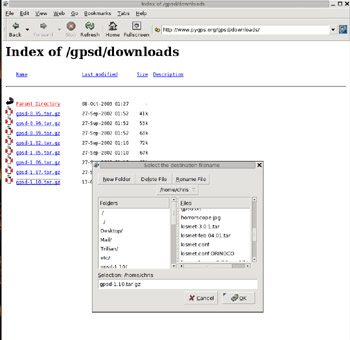
Installing GPSD is a very straightforward process. First, download gpsd-1.10.tar.gz from www.pygps.org/gpsd/downloads/gpsd-1.10.tar.gz, as shown in Figure 6.1.
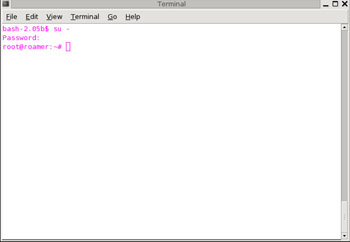
Next, you need to make sure that you have changed to the root user, as shown in Figure 6.2, if you have not done so already.
| Note | All of the examples and screenshots were done in Slackware Linux 9.1; however, the steps taken and commands required are the same regardless of the Linux version you are using. |