Gas Turbines: A Handbook of Air, Land and Sea Applications
Chapter 13: Installation

"Throw your dreams into space like a kite, and you do not know what it will bring back, a new life, a new friend, a new love, a new country."
Anais Nin

Installation of Aircraft Engines [1]

When a gas turbine engine is installed in an aircraft it usually requires a number of accessories fitting to it and connections made to various aircraft systems. The engine, jet pipe, and accessories, and in some installations a thrust reverser, must be suitably cowled and an air intake must be provided for the compressor, the complete installation forming the aircraft power plant.

Power Plant Location

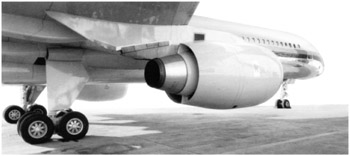
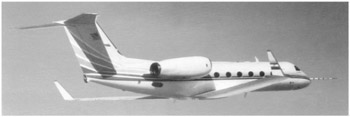
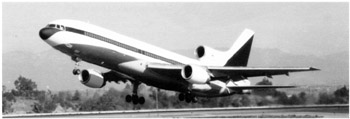
The power plant location and aircraft configuration are of an integrated design and this depends upon the duties that the aircraft has to perform. Turbo-jet engine power plants may be in the form of pod installations that are attached to the wings by pylons (Figure 13-1), or attached to the sides of the rear fuselage by short stub wings (Figure 13-2), or they may be buried in the fuselage or wings. Some aircraft have a combination of rear fuselage and tail-mounted power plants, others, as shown in Figure 13-3, have wingmounted pod installations with a third engine buried in the tail structure. Turbo-propeller engines, however, are normally limited to installation in the wings or nose of an aircraft.


Figure 13-1: Wing-mounted pod installation. (Source Rolls Royce.)

Figure 13-2: Fuselage mounted pod installation. (Source Rolls Royce.)

Figure 13-3: Tail-and wing-mounted pod installation. (Source Rolls Royce.)

The position of the power plant must...

UNLIMITED FREE
ACCESS
TO THE WORLD'S BEST IDEAS

SUBMIT
Already a GlobalSpec user? Log in.

This is embarrasing...

An error occurred while processing the form. Please try again in a few minutes.

Customize Your GlobalSpec Experience

Category: Aerostructures
Finish!
Privacy Policy

This is embarrasing...

An error occurred while processing the form. Please try again in a few minutes.