Cognitive Radio Technology

15.7: Summary and Conclusions

15.7 Summary and Conclusions

This chapter has presented several modeling approaches for describing the interactive decision processes that occur in a network of cognitive radios, specifically covering dynamical systems, contraction mappings, standard interference functions, Markov models, games, potential games, and supermodular games. These models and the techniques for establishing whether a cognitive radio network satisfies the conditions of the model are summarized in Table 15.4.

Table 15.4: Presented models

Model (section number)

Basic model

Identification

Dynamical systems (15.3.1)

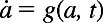
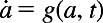
, evolution equation a(t k+1) = f t(a(t k))

always exists. Solve g for f t. f t exists if g satisfies Picard Lindel f theorem

Contraction mappings (in 15.3.2)

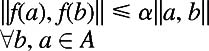
Blackwell's conditions

Standard interference function power control (in 15.3.2)

I(p) satisfies positivity, montonicity, and scalability

Finite ergodic Markov chain (in 15.3.3)

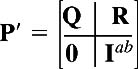
? k such that P k has all positive entries

Absorbing Markov chain (in 15.3.3)

Apply model definition

Game (15.4.3)

Map from cognition cycle

Potential game (15.5.1)

? u i( a, b i) everywhere related to ? V( a, b i)

(others in Section 15.5.1)

Supermodular game (in 15.5.2)

  • (1) A i is a complete lattice

  • (2) u i is supermodular in ai

  • (3) u i has increasing differences in ( ai, a -i)

  • A i is a closed interval in R ki

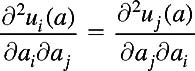
  • u i is twice continuously differentiable on A i

For these game models, this chapter has...

UNLIMITED FREE
ACCESS
TO THE WORLD'S BEST IDEAS

SUBMIT
Already a GlobalSpec user? Log in.

This is embarrasing...

An error occurred while processing the form. Please try again in a few minutes.

Customize Your GlobalSpec Experience

Category: Electronic Noses
Finish!
Privacy Policy

This is embarrasing...

An error occurred while processing the form. Please try again in a few minutes.