The Economics of Recreation, Leisure and Tourism

Part Three: Markets in Practice

Chapter List

Chapter 6: Market structure and pricing
Chapter 7: Market intervention
Objectives and learning outcomes

In the real world it is often difficult to relate prices to the simple demand and supply analysis presented in Chapter 3. For example, we find leisure centres and fitness centres offering similar services at vastly different prices. It has been said that an airline running a jumbo jet carrying 350 passengers will charge 100 different prices. A simple T-shirt can cost as little as $5. Print the word Evisu or Versace on it and its price can rise to more than $50. Some shops have as many sale and offer days as normal trading days. This chapter investigates how prices are determined in the real world.

By studying this chapter students will be able to:

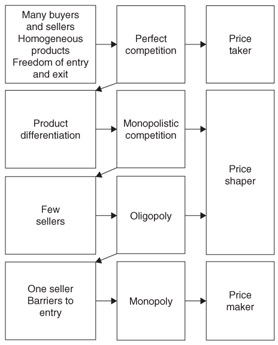
  • understand how and why firms come to be price takers, price makers or price shapers;

  • analyse the pricing strategies that result from different market situations.

Pricing in the private sector

Private sector organizations which seek to maximize profits will attempt to minimize their costs and maximize their revenue. Revenue is composed of price multiplied by quantity sold, and the price that an organization can charge for its product depends largely on the type of market within which it is operating.

Price takers

Perfect competition

At one extreme, economic theory describes the model of perfect competition. In this model there are many buyers, many sellers, identical products, freedom of entry and exit in the market, and perfect knowledge...

UNLIMITED FREE
ACCESS
TO THE WORLD'S BEST IDEAS

SUBMIT
Already a GlobalSpec user? Log in.

This is embarrasing...

An error occurred while processing the form. Please try again in a few minutes.

Customize Your GlobalSpec Experience

Category: Maintenance, Repair, and Overhaul Services
Finish!
Privacy Policy

This is embarrasing...

An error occurred while processing the form. Please try again in a few minutes.