Nolan Drake strides confidently to the front of the room. He appears to be ten years younger than Ross. He is nearly six feet tall and lean. His manner is easy and gentle. Without any preliminaries, he asks the group to turn to page 34 in the notebook and look at the visual (Figure 19).
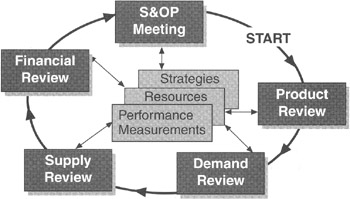 Figure 19: Sales and Operations Planning Basic Model (Copyright Oliver Wight International. Reproduced with permission.)
"You'll remember this visual from this morning," Nolan says. "I'm going to begin at the point labeled 'start' and work my way around the process."
Nolan notes that the executive team has chosen for the company to be strategy and demand driven and has agreed upon an objective to meet or exceed customer expectations. The team also discussed that the process starts with a product review to identify any changes to product development priorities, update schedules, and ensure that projects are on time, on spec, and on cost.
"Once we understand what products will be available to sell and when," Nolan says, "we then update the anticipated demand. The demand review box in the model represents the process of reaching consensus on the forecast of anticipated demand. In the sales and operations planning process, it is strongly recommended that each process step have a process owner who is at the executive level and a process coordinator who is usually at the management level."
Jim Simpson, the manufacturing director, interrupts Nolan. "I am a little confused. Isn't the whole diagram...
Copyright J. Ross Publishing, Inc. 2003 under license agreement with Books24x7

 TABLE OF CONTENTS