Performance, Stability Dynamics, and Control of Airplanes, Second Edition
Chapter 1: Review of Basic Aerodynamic Principles

1.1 Introduction

The performance, stability, and control characteristics of an airplane depend on the aerodynamic forces and moments acting on it that, in turn, depend on the shape and size of the body, the attitude of the body relative to the airstream, the density ? and viscosity of the air, velocity of the body V ?, and the speed of sound a in air. By a dimensional analysis, it can be shown that a number of these variables can be grouped into two important nondimensional parameters, the Reynolds number Re and the Mach number M.

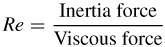
The Reynolds number is the ratio of inertial forces to viscous forces.

(1.1)
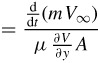
(1.2)
(1.3)

We assume

(1.4)
(1.5)
(1.6)
(1.7)

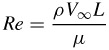
where L is the characteristic dimension (length) of the body. Then

(1.8)

The Mach number is defined as the ratio of velocity of the body V ? to the speed of sound a.

(1.9)

The attitude of the body relative to the airstream is also known as the angle of attack ?, which is defined as the angle between the airstream and a reference line fixed to the body as shown in Fig. 1.1. For airplane wings and horizontal tail, the reference line is typically the chordline and, for fuselages, it is the centerline.


Figure 1.1: Definition of angle of attack.

1.2 Fluid Flow Over Wings and Bodies

The hydrodynamic theory of fluids deals with inviscid or ideal fluid flows. This theory predicts...

UNLIMITED FREE
ACCESS
TO THE WORLD'S BEST IDEAS

SUBMIT
Already a GlobalSpec user? Log in.

This is embarrasing...

An error occurred while processing the form. Please try again in a few minutes.

Customize Your GlobalSpec Experience

Category: Wind Tunnels
Finish!
Privacy Policy

This is embarrasing...

An error occurred while processing the form. Please try again in a few minutes.