A Practical Guide to Call Center Technology

A handy, comprehensive guide for those setting up technology-based phone systems to manage customer matters.
 TABLE OF CONTENTS
 This chapter deals with the hardware, architecture and relationship between the components and subsystems of a switching system, which includes the automatic call distributor (ACD) system. The discussion is limited to traditional switching systems and, for the most part, ignores Voice over IP (VoIP) technology.
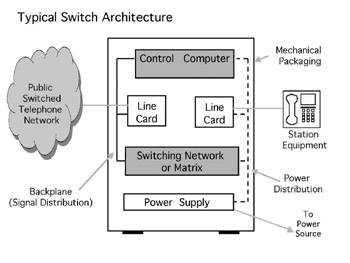
There are seven groups of components or subsystems that make up any switch:
Common control or intelligence of the system.
Internal switching network of the system.
Ports into and resources attached to the switching system.
Backplane or signal distribution subsystem.
Internal power supply.
Power distribution subsystem.
Mechanical packaging of the system.
All these elements are packaged together in a physical housing that allows integration of these subsystems with the software that is stored in the memory of the common control or brains of the system.
This computer technology has evolved from earlier processors and architectures to the more powerful 64 bit processors available today. Yet, tightly written machine level code can run very well on smaller distributed processors. Old, therefore, is not necessarily bad. Many manufacturers are usually reluctant to upgrade core processor technology for the sake of technology since often the many hundreds of man-years invested in software would be unsalvageable. There are, for example, ACD systems that have been in service for over 20 years that are still providing reliable service; although the cost of supporting some of these systems may be prohibitive. Manufacturers find that newer technologies, like VoIP, can offer greater potential for ongoing development and evolution...