Value-based Human Resource Strategy: Developing Your Consultancy Role
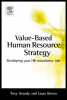
This book demonstrates how HR strategy can be positioned and implemented to generate real shareholder value, using case studies from BT, Dyson, Marks and Spencer and others.
 TABLE OF CONTENTS
 Even before the recession of the early 1990s, managers were becoming increasingly alert to the need to take more control and to have more influence over their development. Previously there was more emphasis on the individual s organization being the primary guardian of development.
For example, when one of the authors worked for the BP Group in the early 1980s, each new manager had an individual programme of development laid out in keeping with the organizational hierarchy (of the time). At that time self-development was not on the radar map. For example, the very idea of individuals deciding to put themselves on an MBA was almost unthinkable.
One of the authors used to joke at the time (of that hierarchy):
By the time I get into a really senior position at BP and get a company car I will probably have to drive a Reliant Robin.
Since then organizations and careers have changed and become far more uncertain, generating a surge of interest in the individuals driving their own development. Since the mid-1990s there has been a surge in growth of public courses (especially short courses which mean that managers do not have to catch up too much with their work when they go back). These changes have mixed benefits/costs, and successful individual development is often accompanied by organization-wide support for learning and development and as part of a coherent strategy.
Although a wide variety of development strategies for the individual exist (courses, projects, MBAs, secondments,...