XML for Data Architects: Designing for Reuse and Integration

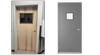
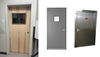
An architectural container form is the adaptation of an observable and repeatable pattern that is applied to a structure model. Patterns are a somewhat controversial topic. Patterns are observable templates or structures that can be applied and repeated in their original form or as a variation. Conceptually, patterns applied to XML and other information technologies have similarities to patterns applied to the architecture of a building. As a simple example of building architecture and structural engineering, a door can be considered as a pattern. Doors are a fundamental part of almost any building. In their most basic form, a door is a simple passage that allows entry and exit of people, animals, items, air, and light and exhibits two mutually exclusive states (either open or closed). As part of a building structure, this definition of a door serves well.
In addition, the application or intended purpose of a door may vary. In a residence, a door might be hinged with a left-to-right and inward method of opening and located at ground level. Alternatively, in a storage warehouse, a door might be roll-up, opening bottom-to-top, with larger dimensions, and located at dock height. As you can imagine, there are many possible variations. The pattern exhibited by a door is observable and can be repeated in different contexts. Each context suggests a new application of the pattern as an architectural form.
With the application of XML, architectural container forms present a similar analogy. The XML structure models described in...