New Trends In Computer Networks
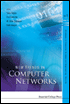
Spanning a wide spectrum of topics in computer networks, this book presents a selective collection of papers from the 20th International Symposium on Computer and Information Sciences, held in Istanbul, Turkey.
J. H. CHOI [ ] , J. G. CHOI [ ] , AND C. YOO [ ]
It is expected that the proportional fair (PF) scheduler will be used widely in cdma2000 1xEV-DO systems because it maximizes the sum of each user's utility, which is given by the logarithm of its average throughput. However, in terms of short-term average throughput, PF scheduler may lead to a large RTT variation. We analyze the impact of PF scheduler on TCP start-up behavior through NS-2 simulation. To show the impact of PF scheduling on TCP, we also analyze the packet transmission delay under the PF scheduling policy through mathematical model.
Recent advances in communication technology make appearance of the packet-based cellular systems such as cdma2000 1xEV-DO 1 and UMTS-HSDPA 2. Being mainly targeted on high-speed data applications that are tolerant of some packet delay, it is reasonable that their schedulers focus on maximizing the sum of each user's utility. A good way of achieving it is to serve the users with good channel condition first utilizing the time-varying feature of wireless channels. This approach increases the system throughput significantly. But, some users can be sacrificed since, in wireless environment, users have very different channel condition according to their location.
The proportional fair scheduler 3 is one of the most promising opportunistic schemes balancing system throughput and user fairness. It is very simple to implement, and also it is optimal in the sense of maximizing the sum of each user's utility that is given by...

 TABLE OF CONTENTS