It is widely acknowledged that using recycled aggregates in construction products will contribute to more sustainable construction. However, there needs to be good technical performance, an economic supply of sufficient quantity, methods of quality assurance and specification, and a market for products of a value appropriate to the costs of producing the processed materials.
Recent work by an industry and research consortium led by Tarmac, with funding from WRAP and the Department for Trade and Industry (DTI), has aimed to develop potential asphalt products incorporating waste plastic and rubber and giving due consideration to the aforementioned factors. A full report on this work can be downloaded from www.trl.co.uk. This work is ongoing, however, laboratory- and pilot-scale field trials have indicated the potential for using manufactured plastic aggregates based on mixtures of waste plastic in asphalt. Figure 31 shows mixed waste plastic after processing into aggregate particle sizes.
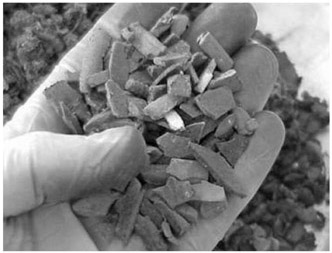 Figure 31: Mixed waste plastic after processing into aggregate particle sizes
 Approximately 0.2 million tonnes of plastic are recycled each year, and single-polymer recycled plastic can cost up to several hundred pounds per tonne. Industrial waste plastic arisings are difficult to separate and process, and these are potential sources of plastic 'aggregates', including mixed plastics and shredder wastes. There are significant volumes of plastic waste being generated from household and agricultural waste, e.g., plastic bottles, containers and packaging, and it is feasible for some of this material to be incorporated into asphalt as an aggregate replacement. The type of plastics/polymers most suited for...
Copyright Rapra Technology Limited 2004 under license agreement with Books24x7


 TABLE OF CONTENTS