Overview
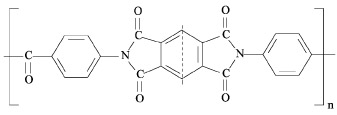
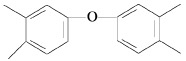
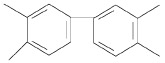
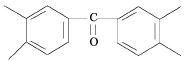
Considerable research effort has been devoted in recent years to the use of chloral derivatives for the synthesis of linear heterocyclic polymers. Of these, the most common are aromatic polyimides [1 12]. Many of these polymers have been synthesised from compounds like 4,4'-diaminobenzophenone, and other diamines, which, as demonstrated in the previous chapter, can be obtained from chloral. Polyimides prepared from these diamines were largely synthesised by the conventional two-step procedure [11, 12] involving mild reaction of the diamines with the bis(phthalic)anhydrides, isolation of poly( o-carboxy)amide (PCA) prepolymers, and then processing into products followed by thermal or chemical imidisation [13 16] (Scheme 3.1). Some properties of polyimides prepared from 4,4'-diaminobenzophenone are provided in Table 3.1.
Table 3.1: Some properties of polyimides of the general formula: | |
| | T soft, C | | Film properties at 25 C |
| T 10%, C | ?, kg/cm 2 | ? % |
| | | 520 | 1250 | 20 |
| | 290 | 480 | 1410 | 16 |
| | 307 | 490 | 1240 | 6 |
| | 290 | 460 | 1500 | 14 |
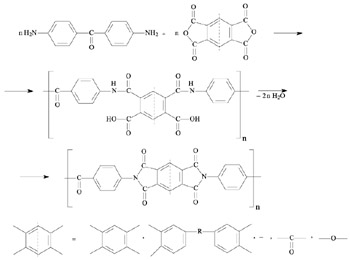 Scheme 3.1
 As can be seen from Table 3.1, polyimides based on 4,4'-diaminobenzophenone and common dianhydrides of tetracarboxylic acids (those of pyromellitic, diphenyloxide-3,3',4,4'-tetracarboxylic and benzophenone-3,3',4,4'-tetracarboxylic acids) possess good thermal properties. However, when in their cyclised forms they are practically insoluble in organic solvents, which restricts the possibility of their investigation, processing and use.
To improve the solubility of polyimides, Korshak and co-workers used 1,1-dichloro-2,2-bis(4-aminophenyl) -ethylene as the starting nucleophile [17] (Scheme 3.2). The resulting polymers turned out to be of relatively high molecular weight ( ? red

 TABLE OF CONTENTS