Overview
Trinitrotoluene (TNT)-based aromatic diamines are used for the preparation of substituted polyimides. Interest in substituted polyimides is very understandable due to the known poor tractability of unsubstituted aromatic polyimides [1 4]. As is known, the introduction of methoxy substituents to macromolecules of polyimides enhances their solubility in organic solvents [5]. One of the simplest TNT derivatives, 3,5-diaminoanisole, is used for the preparation of methoxy-substituted polyimides [6].
Polyimides can be synthesised by reacting 3,5-diaminoanisole with dianhydrides of pyromellitic, benzophenone-3,3',4,4'-tetracarboxylic and diphenyloxide-3,3',4,4'-tetracarboxylic acids in accordance with Scheme 5.1. Scheme 5.1
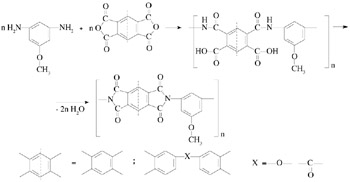 Scheme 5.1
 A number of conventional synthetic procedures have been used to prepare polyimides [1 4]. These are the low-temperature condensation of 3,5-diaminoanisole with acid dianhydrides, conducted in amide solvents, followed by thermal imidisation of the poly ( o-carboxy)-amides (PCA) formed; low temperature condensation of 3,5-diaminoanisole with acid dianhydrides, conducted in amide solvents, followed by catalytic imidisation of PCA using a 1:1 pyridine-acetic anhydride complex as a catalyst; and high temperature (160 180 C) condensation of 3,5-diaminoanisole with acid dianhydrides, conducted in m-cresol, using quinoline, isoquinoline or benzoic acid as a catalyst.
The reaction between 3,5-diaminoanisole and acid dianhydrides in amide solvents (above all N-methyl-2-pyrrolidone, NMP) was conducted at room temperature. The process occurred in a homogeneous system and led to PCA with relatively high, reduced viscosities of solution (Table 5.1).
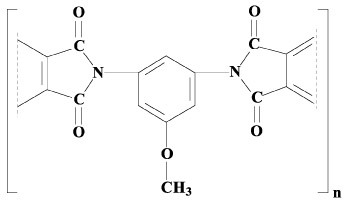
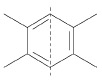
Table 5.1: Characterisation of polyimides of the general formula: | |
| | ? red (0.5%, 25 C), dl/g | T g , C | T10%(TGA air, ? T= 4.5 C/ min),... |

 TABLE OF CONTENTS