American Electricians' Handbook, Fourteenth Edition

Filled with practical advice and facts, this definitive resource provides essential information on designing, installing, operating, and maintaining electrical systems and equipment.
 TABLE OF CONTENTS
 1. A transformer is an apparatus for converting electrical power in an ac system at one voltage or current into electrical power at some other voltage or current without the use of rotating parts. rounds. Sometimes the transformer may have only one winding, which will serve the dual purpose of primary and secondary coils.
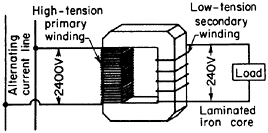
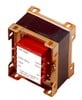
2. A constant-voltage transformer (Fig. 5.1) consists essentially of three parts: the primary coil which carries the alternating current from the supply lines, the core of magnetic material in which is produced an alternating magnetic flux, and the secondary coil in which is generated an emf by the change of magnetism in the core which it sur- rounds. Sometimes the transformer may have only one winding, which will serve the dual purpose of primary and secondary coils.
The high-tension winding is composed of many turns of relatively fine copper wire, well insulated to withstand the voltage impressed on it. The low-tension winding is composed of relatively few turns of heavy copper wire capable of carrying considerable current at a low voltage.
3. Transformer terminology. The primary winding is the winding of the transformer which is connected to the source of power. It may be either the high- or the low-voltage winding, depending upon the application of the transformer.
The secondary winding is the winding of the transformer which delivers power to the load. It may be either the high- or the...