Analytical Ultracentrifugation: Techniques and Methods

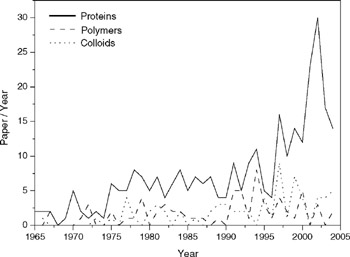
Analytical ultracentrifugation (AUC) is a powerful fractionating technique for polymer and particle characterization, and has played a significant role in facilitating the understanding of colloidal systems, especially macromolecular systems, starting with the pioneering work of Svedberg, [1] , [2] who initially invented this technique for the characterization of particle sizes. [1] , [3] However, it has emerged that this technique is also very well suited for the study of macromolecules, especially biopolymers, with the result that interest has shifted almost exclusively to the study of macromolecules. One important result of the early work was the proof that macromolecules truly exist and that they are not aggregates of small molecules, as was once heavily debated. Consequently, the focus of interest shifted from colloidal to polymeric systems, and the analysis of colloidal systems by AUC was only carried out by very few laboratories thereafter. Since then, AUC appeared almost forgotten as a powerful colloid analysis technique, and even the recent renaissance of colloid chemistry and the advent of nanoscience did not yet change this situation much, in contrast to the increased application of AUC in biophysics as a result of rapid developments in the field of biotechnology. This is understandable since AUC has predominantly found applications in biopolymer characterization rather than in colloid or synthetic polymer characterization (see Figure 1), so the experimental and methodological basis is very well developed for polymer analysis.