Chemical Analysis in the Laboratory: A Basic Guide

2: ACCURACY AND PRECISION

2 ACCURACY AND PRECISION

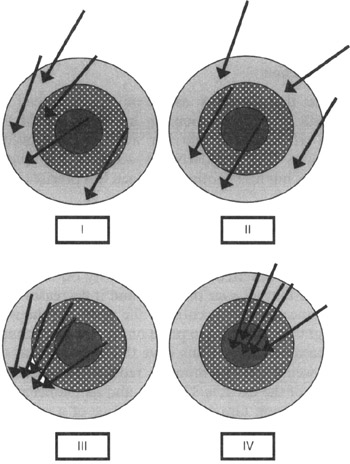
In an archery competition two contestants share the same equipment, but contestant A is more experienced and skilful than the other, B. After the first five shots each, they readjusted the sights to align them correctly (Figure 4.1).


Figure 4.1: Results of an archery competition

Mark which of the results were:

  • A (1 st shots);

  • B (1 st shots);

  • A (2 nd shots);

  • B (2 nd shots).

Mark which shots showed:

  • Good accuracy and poor precision?

  • Good accuracy and good precision?

  • Poor accuracy and poor precision?

  • Poor accuracy and good precision?

Similarly, we have to be concerned with the accuracy and the precision of the measurements we make in analysis. If the instrument or the balance has been calibrated using incorrect standard weights, our results will be inaccurate, however carefully we do the work. Again, if the volumetric flask is not correctly calibrated, the measurements we make with it will be wrong. Incorrect calibration gives systematic or non-random errors in the results. If the error is known and is consistent, we may be able to correct our results by multiplying by a factor. However, it is better to eliminate the systematic error at its source if we can, then we know that the instrument or method in use is correctly setup to give results that are accurate within a specified range of the true result.

Almost all measurements are subject to some random error. This is the inherent variability of the process...

UNLIMITED FREE
ACCESS
TO THE WORLD'S BEST IDEAS

SUBMIT
Already a GlobalSpec user? Log in.

This is embarrasing...

An error occurred while processing the form. Please try again in a few minutes.

Customize Your GlobalSpec Experience

Category: LiDAR Sensors
Finish!
Privacy Policy

This is embarrasing...

An error occurred while processing the form. Please try again in a few minutes.