Chromic Phenomena: Technological Applications of Colour Chemistry
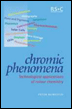
Providing an entry point both for new researchers and for established ones, this book develops and investigates new applications for color chemistry.
 TABLE OF CONTENTS
 Bioluminescence is the production of light by living systems. The best-known example of this phenomenon is the characteristic glow of the firefly, but other luminous species include bacteria, fungi and other animals such as jellyfish, scale-worms, deep-sea squid, prawn and fish. In animals bioluminescence is used as a diversionary tactic when disturbed, to attract prey and of course as a mating signal during courtship.
Bioluminescence is essentially a chemiluminescent reaction catalysed by a specific enzyme, e.g. luciferase in the case of the firefly Photinus pyralis. However, to produce bioluminescence in an organic system the substrate must meet the requirements of the particular protein, which are highly specific to its structure. Quantum yields in bioluminescent systems are high, usually in the range of 0.1 0.9, the firefly exhibiting a yield of 0.88. The protein catalysts in bioluminescence are all oxidases, with the light emission originating in most cases by the oxidation of a substrate by oxygen or hydrogen peroxide.
A bioluminescent system requires a luciferin and a luciferase, a substrate, a trigger, and sometimes an ancillary emitter. The structure of the luciferins and luciferases depend on their source in nature and this method of categorisation will be followed in the text below.48b
The firefly luciferin, the structure of which is based on two thiazole units (3.103), undergoes a luciferase-catalysed oxidation with the emission of light (562 570 nm), in the presence of the cofactor MgATP (adenosine triphosphate). The chemical processes leading to light...