Embedded Ethernet and Internet Complete: Designing and Programming Small Devices for Networking
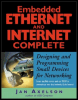
This is a guide to designing and programming embedded systems to communicate in local Ethernet networks and on the Internet.
An embedded system is a device that has computer intelligence and is dedicated to performing a single task, or a group of related tasks. Embedded systems often perform monitoring and control functions such as gathering and reporting sensor readings or controlling motors and switches. They re called embedded systems because the program code is an integral part of, or embedded in, the devices.
Ethernet is the networking technology used in many offices and homes to enable computers to communicate and share resources. Many Ethernet networks also connect to a router that provides access to the Internet.
For many years, embedded systems and Ethernet networks existed in separate worlds. Ethernet was available only to desktop computers and other large computers. Embedded systems that needed to exchange information with other computers were limited to interfaces with low speed, limited range, or lack of standard application protocols.
But developments in technology and the marketplace now make it possible for embedded systems to communicate in local Ethernet networks as well as on the Internet. Network communications can make an embedded system more powerful and easier to monitor and control. An embedded system can host a Web site, send and receive e-mail, upload and download files, and exchange information of any kind with other computers connected via a network interface.
One development that has made Ethernet feasible for embedded systems is the availability of inexpensive controller...