Embedded Image Processing on the TMS320C6000 DSP: Examples in Code Composer Studio and MATLAB

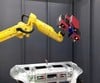
Chapters 3 and 4 dealt with image enhancement. In this chapter, the focus shifts to image analysis, which in some respects is a more difficult problem. Image analysis algorithms draw on information present within an image, or group of images, to extract properties about the scene being imaged. For example, in machine vision applications, images are analyzed to oftentimes determine the orientation of objects within the scene in order to send feedback to a robotic system. In medical imaging registration systems, radiographs, or slices from 3D volumes, are analyzed or fused together by a computerized system to glean information that a clinician or medical device may be interested in, such as the presence of tumors or the location and orientation of anatomical landmarks. In military tracking systems, interest lies in identifying targets, such landmarks, enemy combatants, etc. There are many other real-world applications where image analysis plays a large role.
Generally speaking, image analysis boils down to image segmentation, where the goal is to isolate those parts of the image that constitute objects or areas of interest. Once such objects or regions have been separated from the image, various characteristics (e.g. center-of-mass or area) can be computed and used towards a particular application. Many of these algorithms utilize various heuristics and localized domain knowledge to help steer the image processing algorithms to a desired solution, and therefore it is essential for the practitioner to be well-grounded in the basics. Universally applicable image segmentation techniques general enough to...