Free-Space Optics: Propagation and Communication

Chapter 2: Basic Principles of Electromagnetism

2.1. Introduction

Information can be transmitted in various ways. Among the possibilities, one of the more powerful is the use of electromagnetic waves for the transfer of information. Let us return to these in more detail here. This chapter gives a traditional description of electromagnetic waves. We shall introduce Maxwell's equations for the propagation of electromagnetic waves in various media, and give the expression for the energy associated with these waves. Finally, we will present models for the propagation of rays.

2.2. Maxwell's Equations in an Unspecified Medium

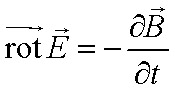
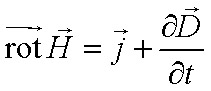
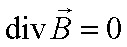
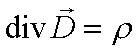
The propagation of electromagnetic waves is deduced from Maxwell's equations [BRUHAT, 1992, COZANNET, 1983, VASSALLO, 1980, SEELY, 1979, BORN, 1983].

(2.1)
(2.2)
(2.3)
(2.4)

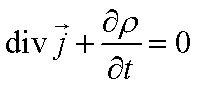
is the electric field (in V/m), and the magnetic field (expressed in A/m) associated with the electromagnetic wave. and are the electric displacement (in C/m 2) and magnetic induction (in Wb/m 2 or T), respectively, which describe the influence of a medium on the propagation of electromagnetic waves. ?. is the electric charge density (in C/m 3) and is the electric current density (in A/m 2). and ? are bound by the condition of charge conservation, that is, charge is conserved at any point:

(2.5)

Using these equations, it is possible to determine the electromagnetic wave propagation in any medium. In the case of free-space propagation, which is the subject of this book, the set of preceding equations is simplified. The wave propagates in a homogeneous...

UNLIMITED FREE
ACCESS
TO THE WORLD'S BEST IDEAS

SUBMIT
Already a GlobalSpec user? Log in.

This is embarrasing...

An error occurred while processing the form. Please try again in a few minutes.

Customize Your GlobalSpec Experience

Category: Finite-difference time-domain (FDTD) Software
Finish!
Privacy Policy

This is embarrasing...

An error occurred while processing the form. Please try again in a few minutes.