The German Enigma Cipher Machine: Beginnings, Success, and Ultimate Failure
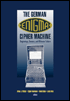
C. A. Deavours and James Reeds
Popularization tends to glamorize its subject, generally for the purpose of focusing attention upon it. The price extracted in this process is often the truth. Left behind for future inquisitors to sift through are the half-told tales, distortions, and even outright concoctions which often mark the popularization mode.
This article is an attempt, perhaps only a first one, to unravel and unveil several of the "enigmas" of the Enigma. Many recent best-selling accounts have concerned themselves at length but without substance about the development of the Enigma machine in prewar Germany and its successful cryptanalysis by the British during World War II. In many of these works the ratio of wishful thinking and speculation to truth is large. Part of the problem encountered is continuing and needless governmental secrecy, but, for the most part, the writers themselves are journalists and their information comes not from former cryptanalysts but from those whose first-hand knowledge was peripheral in the first place. Information gleaned from such sources is usually not reliable, often consisting of dimly recalled events long past which were probably not well understood even when they happened.
Official records as always remain silent on cryptanalytic matters of this sort. Recent British release of photos and some accompanying data is exceptional in this regard. The newly revealed British repertory of early computing devices is indeed impressive: the Turing bombes and Colossi which emulated and solved much Enigma enciphered material and the Heath-Robinson series of machines...