Hard Disk Drive Servo Systems, 2nd Edition

Reflecting recent improvements in spindle speed, bit density, and other changes in this fast-moving field, this monograph focuses on the applications of some newly developed results in control theory.
Hard disk drives (HDDs) provide an important data-storage medium for computers and other data-processing systems. In most commercial HDDs, rotating disks coated with a thin magnetic layer or recording medium are written with data that are arranged in concentric circles or tracks. Data are read or written with a read/write (R/W) head, which consists of a small horseshoe-shaped electromagnet. Figure 1.1 shows a simple illustration of a typical hard disk servo system with a voice-coil-motor (VCM) actuator.
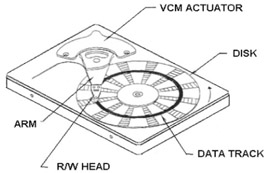
The two main functions of the R/W head-positioning servomechanism in disk drives are track seeking and track following. Track seeking moves the R/W head from the present track to a specified destination track in minimum time using a bounded control effort. Track following maintains the head as close as possible to the destination track center while information is being read from or written to the disk. Track density is the reciprocal of the track width. It is suggested that, on a disk surface, tracks should be written as closely spaced as possible so that we can maximize the usage of the disk surface. This means an increase in the track density, which subsequently means a more stringent requirement on the allowable variations of the position of the heads from the true track center.
The prevalent trend in hard disk design is towards smaller hard disks with increasingly larger capacities. This implies that the track width has to be smaller, which...

 TABLE OF CONTENTS