Introduction to Glass Science and Technology, Second Edition

Discussions of the structural models for oxide glasses almost always begin with vitreous silica and the alkali silicate glasses. Structural models for most other silica-based glasses are derived from those for these systems, as is most of the terminology used in discussing glass structural models in general.
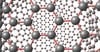
The structure of vitreous silica is readily described by the network structural rules of Zachariasen (Table 5.1). The silicon-oxygen tetrahedron, with a coordination number of 4, serves as the basic building block for the network, as required by the second of Zachariasen's rules. Since these tetrahedra have a high degree of internal order, the short range order of the glass is preserved. These tetrahedra are linked at all four corners (rules 3 and 4) to form a continuous, 3-dimensional network. Each oxygen atom is shared between two silicon atoms, which occupy the centers of linked tetrahedra. Disorder in this structure is obtained by allowing variability in the Si O Si angle connecting adjacent tetrahedra. Additional disorder is introduced by allowing rotation of adjacent tetrahedra around the point occupied by the oxygen atom linking the tetrahedra, and by rotation of the tetrahedra around the line connecting the linking oxygen with one of the silicon atoms. Since the Si O Si angle and the rotations are described by distributions of values rather than the single values found in crystal lattices, no long range periodicity exists.
A 2-dimensional representation of such a structure is shown in Figure 5.1, where the...