Introduction to Glass Science and Technology, Second Edition

Chapter 8: Transport Properties

1 INTRODUCTION

A number of properties of glasses are controlled by the diffusion, or transport, of atoms or ions through the vitreous network. The electrical conductivity of almost all inorganic glasses containing monovalent ions is controlled by the diffusion of these monovalent ions under the influence of an external electric field. Chemical dissolution often begins with interdiffusion of alkali ions from glasses and proton species from the surrounding fluid. Ion exchange between alkali ions in the glass and a surrounding melt can be used to strengthen glasses by producing a compressive surface region. Other ion exchange processes are used to produce optical devices based on a graded refractive index from the surface to the bulk of the glass. Dielectric and mechanical losses are often due to movement of mobile ions under the influence of a reversing electric or stress field. Permeation of gases into and through glasses is controlled by the mobility of atoms or molecules through the vitreous network, as are many diffusion-controlled reaction processes.

2 FUNDAMENTALS OF DIFFUSION

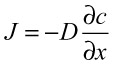
The diffusion coefficient, or diffusivity, D, is defined by Fick's First Law:

(8.1)

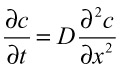
where J is the flux of diffusing species and ?c/ ?x is the concentration gradient of the diffusing species in the direction x. The rate of change of concentration, c, with time at a given distance into the sample is given by Fick's Second Law:

(8.2)

The diffusion coefficient of alkali ions in glasses is usually found by placing a thin...

UNLIMITED FREE
ACCESS
TO THE WORLD'S BEST IDEAS

SUBMIT
Already a GlobalSpec user? Log in.

This is embarrasing...

An error occurred while processing the form. Please try again in a few minutes.

Customize Your GlobalSpec Experience

Category: Residual Gas Analyzers
Finish!
Privacy Policy

This is embarrasing...

An error occurred while processing the form. Please try again in a few minutes.