Mass Spectrometry for Chemists and Biochemists, Second Edition

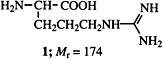
The method used to ionize a substance influences markedly the appearance of its mass spectrum. This effect is illustrated in figure 3.1, which shows mass spectra of the amino acid arginine (1) obtained by electron ionization, chemical ionization, in-beam chemical ionization, field desorption, fast

atom bombardment, thermospray, electrospray and plasma desorption. In figure 3.1, and throughout this chapter, mass spectra are of positively charged ions unless otherwise stated, simply because most mass spectrometry to date has concerned them. Using the gas-phase EI method, arginine gives some mass peaks useful for characterization either by manual interpretation (chapter 10) or by library searching (chapter 4). However, the diagnostically important molecular ions ( m/z 174) are absent because, when heated, arginine decomposes before it evaporates (figure 3.1(a)). Given that chemical ionization also requires volatilization of sample molecules, it is not surprising that the CI spectrum does not show protonated molecules [M+H] + at m/z 175. On the other hand, techniques like field desorption, fast atom bombardment and electrospray that do not require the sample to attain the gas phase prior to ionization, do give [M+H] + ions (figure 3.1 (d), (e) and (g)). Also, the amount of fragmentation is much reduced with these last methods of ionization. This situation is typical for many compounds and indicates that no one ionization technique is always superior to the others. If the compound (1) had been unknown, it would not have been ...