Metro Area Networking

Detailing the technological challenges and opportunities in a lucid, humorous prose, this book lays bare the tricks and traps awaiting service providers in the metro area space.
 TABLE OF CONTENTS
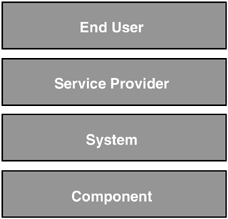
 The proliferation of demand for metro services is going to result in a significant increase in metro spending, a fact that will affect all three levels of the metro networking hierarchy: the component manufacturers, the systems manufacturers, and the service providers (see Figure 5-1). Between now and 2006, metro spending in North America will grow from approximately $400 million to $3 billion, with roughly $2.5 billion of that in products and half a billion in services.
Primary reasons for this increase include performance improvement, the demand for increased network availability, and network robustness and redundancy. Interestingly, the projected spending trends reflect an evolution away from traditional connectivity (T1 and DSL) in favor of Ethernet. Because most corporate traffic begins and ends as Ethernet frames today, a strong push exists to extend its use to the wide area network (WAN), hence the proliferation of Ethernet service providers. Furthermore, the evolving applications described earlier storage area networks (SANs) and virtual private networks (VPNs) that extend Ethernet s reach add to the pressure to push the use of Ethernet transport.
In this section of the book we discuss metro players: who they are, what they do, and how they are positioned. As mentioned briefly earlier, the metro environment has three key segments: the component manufacturers that create semiconductor and opto-electronic devices;the systems manufacturers that buy components to assemble complex devices such as routers, switches, and multiplexers;and the service providers that buy systems to be used...