Pump Handbook, Third Edition

IGOR J. KARASSIK
C. J. TULLO
A centrifugal pump is primed when the passageways of the pump are filled with the liquid to be pumped. The liquid replaces the air, gas, or vapor in the passageways. This may be done manually or automatically.
When a pump is first put into service, its passageways are filled with air. If the suction supply is above atmospheric pressure, this air will be trapped in the pump and compressed somewhat when the suction valve is opened. Priming is accomplished by venting the entrapped air out of the pump through a valve provided for this purpose.
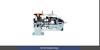
Unlike a positive displacement pump, a centrifugal pump that takes its suction from a supply located below the pump, which is under atmospheric pressure, cannot start and prime itself (unless designed to be self-priming, as described later in this section). At its rated capacity, a positive displacement pump will develop the necessary pressure to exhaust air from its chambers and from the suction piping. Centrifugal pumps can also pump air at their rated capacity, but only at a pressure equivalent to the rated head of the pump. Because the specific weight of air is approximately
that of water, a centrifugal pump can produce only
of its rated liquid pressure. For every 1 ft (1 m) water has to be raised to prime a pump, the pump must produce a discharge head of air of approximately 800 ft (m). It is therefore apparent that...