- Chapter 1: INTRODUCTION
- Chapter 2: ROLE OF THE HEAT OUTPUT
- Chapter 3: CONTROLS IN COMMON USE
- Chapter 4: THERMOSTATS AND THERMAL COMFORT
- Chapter 5: ENERGY MANAGEMENT SYSTEMS
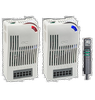
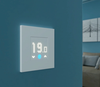
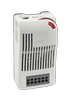
This section focuses primarily on the governing control that provides the initial signal to the component(s) that are appropriate to operate each type of radiant heating panel, equipment, and system. The initial control is normally either a low- or line-voltage thermostat.
Thermostats usually operate in relation to the air temperature that is sensed or measured in the occupied space. For nonconcealed or visible electric systems, such as wall or ceiling radiant panels, a room or area thermostat may be the only control required. A single low-voltage control is also often used for gas-fired radiant heaters.
For concealed or hydronic systems, more complex control design may be required. Embedded electric or hydronic floor heating may also have an over-temperature-limit sensor or temperature control located in the radiant floor panel to prevent the panel from exceeding a maximum temperature or to control surface temperature to a specific maximum comfort temperature. For floor warming, the only control parameter may be the actual floor surface temperatures, not in-space air temperature.
The hydronic system s master thermostat may have an array of supportive flow and temperature control sensors and valves that interact in response to the master control. Slave or independent area controls may be employed to implement zone control. The entire system may also be further governed by an outdoor reset control that communicates changing outdoor temperatures so...
Copyright The McGraw-Hill Companies, Inc. 2002 under license agreement with Books24x7

 TABLE OF CONTENTS