Random Networks for Communication

2.5: Random Connection Model

2.5 Random Connection Model

We now consider the random connection model introduced in Chapter 1. Let X be a Poisson point process on the plane of density ? > 0. Let g( ) be a random connection function from 2 into [0, 1] that depends only on the Euclidean norm x and is non-increasing in the norm. Every two points x, y ? X are connected to each other with probability g(x ? y). We also make the additional assumption that g satisfies the integrability condition: . In the following, we always condition on a Poisson point being at the origin.

It is easy to see that the integrability condition is required to avoid a trivial model. Indeed, let Y denote the (random) number of points that are directly connected to the origin. This number is given by an inhomogeneous Poisson point process of density ?g(x), so that


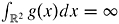
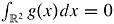
where this expression is to be interpreted as zero in the case . It follows that if then P( Y = 0) = 1, and each point is isolated a.s. On the other hand, if diverges, then P( Y = k) = 0 for all finite k, and in that case, Y = ? a.s.

As usual, we write the number of vertices in the component at the origin as C and ?( ?

UNLIMITED FREE
ACCESS
TO THE WORLD'S BEST IDEAS

SUBMIT
Already a GlobalSpec user? Log in.

This is embarrasing...

An error occurred while processing the form. Please try again in a few minutes.

Customize Your GlobalSpec Experience

Category: Automated Test Equipment
Finish!
Privacy Policy

This is embarrasing...

An error occurred while processing the form. Please try again in a few minutes.