Random Networks for Communication

In this appendix we collect a number of technical items that are used in the text, but which we did not want to work out in the main text in order to keep the flow going.
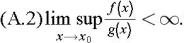
We often make use of the standard so-called order notation , which is used to simplify the appearance of formulas by hiding the uninteresting terms. In the following x 0 can be ?. When we write
we mean that
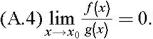
When we write
we mean that
Stirling s formula can be found in just about any introductory textbook in calculus or analysis. It determines the rate of growth of n! as n ? ?. It reads as follows:
The ergodic theorem can be viewed as a generalisation of the classical strong law of large numbers (SLLN). Here we only present a very informal discussion of the ergodic theorem. For more details, examples and proofs, see the book by Meester and Roy (1996).
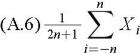
Informally, the classical SLLN states that the average of many independent and identically distributed random variables is close to the common expectation. More precisely, if X ?1, X 0, X 1, X 2, . are i.i.d. random variables with common expectation ?, then the average
converges to ? with probability one, as n ? ?.
It turns out that this result is true in many circumstances where...