Satellite Systems Engineering in an IPv6 Environment

Satellite communication plays, and will continue to play, a key role in commercial, TV/media, government, and military communications because of its intrinsic multicast/broadcast capabilities, mobility aspects, global reach, reliability, and ability to quickly support connectivity in open-space and/or hostile environments. At a different level, Internet Protocol version 6 (IPv6) is a technology now being deployed in various parts of the world that allows true explicit end-to-end device addressability. As the number of intelligent systems that need direct access expands to the multiple billions (e.g., cell phones, personal digital assistants (PDAs), appliances, sensors/actuators/Smart dust, and even body-worn biometric devices), IPv6 becomes an institutional imperative in the final analysis. The integration of satellite communication and IPv6 capabilities promises to provide a powerful networking infrastructure that can serve the evolving needs of government, military, IP-based television (IPTV), and mobile Digital Video Broadcast Handhelds (DVB-H) stakeholders, to name just a few.
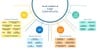
This text provides a pragmatic assessment of satellite communication and engineering in an IPv6 environment and in light of newly evolving applications. Because the U.S. government is a major user of satellite systems and a proponent of IPv6, this text may be of interest to this community of users, among others. The satellites of the future will not only be signal regenerators in space but will contain onboard IP and IPv6 routers to facilitate intelligent traffic distribution; hence, it is important to understand the interplay and overlaying of IPv6 routing over a satellite-based transmission channel. The first part of the text (Chapters...