Simplified TRIZ: New Problem Solving Applications for Engineers and Manufacturing Professionals

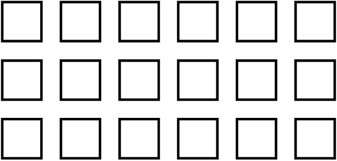
Segmentation. Fragmentation. Transition to microlevel. Divide an object or system into independent parts. Make an object easy to disassemble. Increase the degree of fragmentation or segmentation (see Figure 10.2).
Examples:
The law of the transition to microlevel, considered in the previous chapter, is the result of the repeated application of the principle of segmentation. Segmentation is a very frequently used principle. It helps to "combine the incompatible" and meet contradictory requirements in many different problems. Recall the example of fire extinguishing. More effective firefighting (good) requires more water and causes water damage (bad). Water is necessary and, at the same time, there should be no water. Let's segment water to small droplets and then increase the degree of fragmentation to mist. Mist can suppress fire effectively, using a very small amount of water. In previous chapters, we processed the problem through many steps. It is possible to get the idea directly, using the single principle of segmentation.
Stone washing is one of the technologies used to give denim needed features and appearance. Stones are, however, rather crude tools and clumsy machinery is needed to handle them. A nice solution is to use enzymes instead of stones to get the same result. Enzymes are not small stones, but the concept of using molecules instead of large objects comes from the principles of segmentation.
In previous chapters, we considered the noise problem of the...