Telecom Crash Course, Second Edition

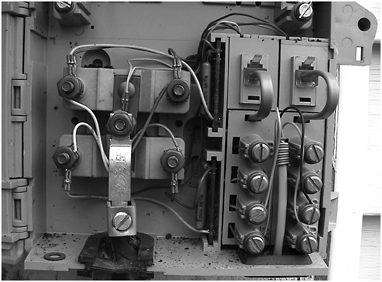
Before we enter the central office, we should pause to explain the topology of the typical network (please refer to Figure 3-9). The customer s telephone, and most likely, their PC and modem, are connected via house wiring (sometimes called inside wire) to a device on the outside of the house or office building called a protector block (see Figure 3-12). It is nothing more than a high-voltage protection device (a fuse, if you will) designed to open the circuit in the event of a lightning strike or the presence of some other high-voltage source. It protects both the subscriber and the switching equipment.
The protector connects to the network via twisted pair wire. Twisted pair is literally that a pair of wires that have been twisted around each other to reduce the amount of crosstalk and interference that occur between wire pairs packaged within the same cable. The number of twists per foot is carefully chosen.
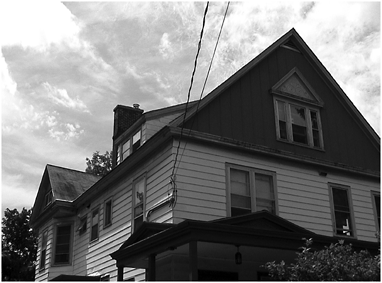
The twisted pair(s) that provides service to the customer arrives at the house on what is called the drop wire. It is either aerial, as shown in Figure 3-13, or buried underground. We note that there may be multiple pairs in each drop wire because today the average household typically orders a second line for a home office, computer, fax machine, or teenager.
Once it reaches the edge of the subscriber s property, the drop wire typically terminates...