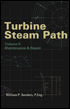
Turbine Steam Path Maintenance and Repair, Volume Two
When a rotating component has been damaged, the maintenance engineer will review the situation and reach a decision concerning the most appropriate action to be taken to allow the condition to be corrected, so that the unit can be returned to a structurally safe and serviceable condition, in the shortest time possible. These corrective actions must be consistent with retaining component and stage reliability. There are instances where utilities and other owners have spare rotors or replacement components, which allow necessary replacements to be made. However, this is not a common practice; it is normally limited to installations where duplicate units exist, or in some instances where the financial consequences of a forced or extended outage are considerably greater than the cost of the rotor.
The concern with rotating components is that they are normally subject to high levels of centrifugal stress due to their own weight. The rotating components may also be subjected to other forms of stress, which in a damaged condition may be aggravated, thereby increasing total stress levels and reducing the "factor of safety" (FofS) below an acceptable level.
When a damage condition has been determined to exist, two actions are required of the engineering group responsible for correcting the situation:
First, a review should be made of the condition to determine the cause of the damage. This review should include, as far as possible, identifying the initiating and driving mechanisms involved (see chapter 1). In many situations this is a relatively simple process, and...