Vacuum Technology: Calculations in Chemistry
Such pumps are gas-transfer pumps. They are used extensively both to back high-vacuum pumps and to act as devices for achieving pressures in the rough-medium range in activities such as distillation, drying, etc.
The role of the oil in these pumps is to seal (isolate low pressure gas entering via the inlet from higher pressure gas at the outlet), lubricate and transfer heat. It also allows high degrees of gas compression to be achieved.
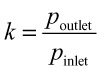
For gas-transfer pumps generally, the compression ratio ( k) can be defined as:
| (3.1) | |
With oil-sealed rotary pumps, it is possible to achieve values of k of 10 5 to 10 6.
The S 0 vs p characteristics of typical single- and two-stage oil-sealed rotary pumps are shown in Figure 3.1. For the single-stage pump, S 0 is almost constant from atmospheric pressure down to about 1 mbar. At lower pressures, the pumping speed decreases with increasing rapidity until the ultimate pressure ( p ult) is reached where S 0 = 0. Generally, p ult for a single-stage pump is about 10 -1 mbar; 10 -2 mbar could only be achieved by placing a cold trap between the pump and the vacuum gauge to condense oil/water vapour. With two-stage pumps, S 0 is constant down to 10 -2 mbar before it begins to decrease. Such pumps, with cold traps, will...