Wet-Steam Turbines for Nuclear Power Plants

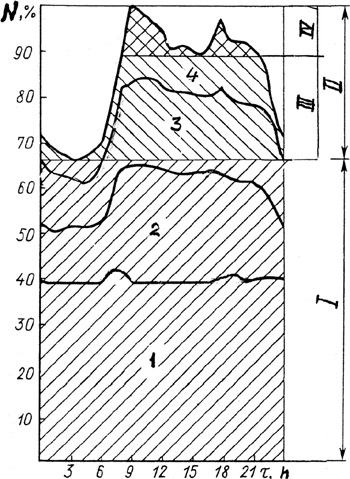
As a rule, nuclear power plants cover the base part of power consumption graphs; that is, they are operated in a base-load mode with minimal participation in governing the power system's load (Fig. 4-1). First of all, this is a high portion of capital expenditures and relatively low contributions from the fuel constituent in the power generation predetermined by the costs of nuclear power plants. As a result, it is reasonable and profitable to exploit these plants with as large a utilization factor value as possible. In addition, stationary operating conditions provide the most favorable safety environment for nuclear power plants. For all of these reasons and thanks to high operating reliability (see chapter 1), the annual average capacity factor for the world's nuclear power plants is remarkably high, making up 78.9% in 2001 (compared to 76.4% in 2000). The power utilities of such countries as Belgium, China, the Czech Republic, Finland, Germany, Hungary, the Netherlands, Romania, South Korea, Spain, Switzerland, and the United States managed to maintain the national average capacity factors of their nuclear power plants above 85%. [1] Table 4-1 ranks the top 50 nuclear power units worldwide in 2001 by the annual capacity factor. A nuclear power unit had to operate at a capacity factor value above 95% to be included on this list.