From Rick Gallagher's MPLS Training Guide: Building Multi-Protocol Label Switching Networks
Exercise 7.1: Case Study 1

In this case study, your team has been asked to explore the MPLS VPN options for a point of sales service.

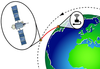
The network structure is shown in Figure 7.39. Note that the VAST terminals use 64K (slotted aloha) as an upstream link; they receive 256 K of data streamed down from headquarters. This network is a hub-and-spoke design. The network uses an SNA-polled protocol, equipped with protocol spoofing to reduce polling over the satellite link.


Figure 7.39: Case Study 1

The satellite lease period will be renewable in 60 days, with an increase of service fees by 60 percent. The customer is looking at an MPLS VPN as an alternative, cost-saving service.

1.

Is MPLS VPN service appropriate, and if so, why?

2.

Which MPLS VPN service is recommended?

3.

How do you justify your recommendation?

Answers

1.

MPLS VPN is best suited for fully meshed network; a cost analysis would determine whether MPLS could produce a savings.

2.

None

3.

No recommendations

Copyright Syngress Publishing, Inc. 2003 under license agreement with Books24x7

Products & Services
VPN Software
VPN software enables private communications over public computer networks and telecommunications infrastructure. Virtual private networks (VPN) provide network connectivity over long distances, and support network services such as file sharing and video conferencing.
Network Processors
Network processors handle a wide array of tasks needed to support network systems, including routing, compression, encryption, authentication, and protocol conversion.
Network Appliances
Network appliances are inexpensive personal computers (PC) or computer boards that provide Internet access and promote network security. They lack many of the features of fully-equipped PCs, however.
Mobile Satellite and Mobile Command Center Services
Mobile satellite and mobile command center services provide setup and installation of mobile communication centers and mobile communication equipment.
Protocol Stack Software
Protocol stack software is a set of hierarchical network protocols that manage the flow of data in communication systems. Each protocol in the stack or suite supports the protocol above it and uses the one below it. TCP/IP is an example of a stack.

Topics of Interest

Practical Application: Implementing a VPN The approach taken to implement a VPN will vary between the vendors. Where Dr. Yakov Rekhter of Juniper advocates the use of BGP to carry routing and...

Exercise 7.2: Case Study 2 Rag-Tag Books has asked you to assist them in converting from their full-mesh ATM network (shown in Figure 7.45) to an MPLS VPN. Each store has four connections. They are...

MPLS VPN Topologies As MPLS developed, it became apparent that MPLS VPNs could provide a flexible VPN solution to service providers and ISPs alike. In order to meet these needs, the Layer-3 MPLS VPN...

Overview To many people, quality of service (QoS) is the driving factor behind MPLS. This is actually something of a misconception. Compared to other factors, such as traffic engineering and Virtual...

Overview This chapter provides a synopsis of multiprotocol label switching (MPLS) features (deferring the main technical discussion on MPLS to Chapter 4, "Features of MPLS"), and then focuses on...